When I finished reading Adam Shoalts’ A History of Canada in Ten Maps, I couldn’t stop thinking about how much those early explorers and map-makers had in common with leaders today.
They faced uncertainty, discomfort, risk, and sometimes failure — yet they kept moving forward, trusting something larger than themselves.
Leadership, I’ve learned, is not about having a perfect map. It’s about having the courage to chart one.
From Outer Exploration to Inner Discovery
Shoalts’s book traces the bold journeys that shaped Canada — from Norse adventurers to Samuel de Champlain, David Thompson, and the Arctic explorers who reached the limits of the known world.
Each of them set out with incomplete information, relying on intuition, collaboration, and faith that they could find a way through.
Reading those stories, I couldn’t help but see the parallels to the modern world — where leaders in wellness, hospitality, and life itself are also navigating uncharted territory.
In our businesses and in our personal lives, we’re constantly asked to step into the unknown.
We may not be mapping rivers or mountain passes, but we are mapping new ways of leading, relating, and creating with compassion.
Every Leader Is an Explorer
The explorers in Shoalts’s book didn’t just follow trails — they created them.
They relied on guides, local knowledge, and community to help them move through unknown landscapes. The ones who succeeded most were those who listened and adapted.
That’s leadership.
Whether guiding a spa team, building a retreat, or managing a wellness business, true leadership requires curiosity and humility. It’s about collaboration — recognizing that you don’t have to know everything, but you do need to listen deeply to those who do.
In A History of Canada in Ten Maps, I was struck by how often Indigenous knowledge made survival possible.
This reminded me of how vital it is, in any organization or community, to honor and integrate the wisdom of those who came before — the knowledge that exists in the land, the people, and the culture you’re part of.
Lessons in Leadership from the Map-Makers
1. Courage Is Born in Uncertainty
Every one of Shoalts’s ten maps began as a blank page.
There were storms, miscalculations, and even tragedies — but the explorers pressed on.
In leadership, that same blank page appears whenever you launch something new: a business idea, a course, a vision for your team.
We can’t always know the outcome, but we can cultivate courage — the quiet, steady kind that keeps us moving when the way forward isn’t clear.
“Courage,” I often tell my coaching clients, “isn’t about knowing the way — it’s about trusting yourself enough to begin.”
2. Perspective Shapes the Map
Every map is drawn from a point of view. What’s emphasized or omitted tells us as much about the map-maker as the terrain itself.
The same is true in leadership. Our worldview, biases, and values shape the “maps” we draw for our teams and businesses.
If we want to lead consciously, we need to widen our perspective — to include diverse voices, to see beyond the familiar, and to be willing to redraw when new information arrives.
Just as Champlain’s maps changed with every expedition, our understanding of leadership deepens as we continue learning and listening.
3. The Journey Is the Work
Explorers often set out to reach a destination, but it was the journey that transformed them.
Shoalts’s storytelling reveals how endurance, patience, and faith were built step by step, mile by mile.
Leadership works the same way.
It’s easy to fixate on goals — success metrics, growth numbers, titles — but real leadership happens in the daily choices: the conversations you have, the values you uphold, the small acts of integrity that define your culture.
The journey is the destination.
Mapping the Inner Terrain
When I worked with spa directors and wellness professionals, one of the things I emphasized most was self-leadership.
You can’t guide others effectively if you haven’t first mapped your own landscape — the beliefs, fears, values, and boundaries that shape how you show up.
In that sense, we are all cartographers of our inner world.
We map our strengths and shadows, learn the patterns of our emotions, and find the rivers that keep our creativity flowing.
Sometimes the terrain is rocky; sometimes it’s breathtaking. But it’s always alive — always changing.
From Wilderness to Wellness
When the explorers in Shoalts’s book finally reached the Pacific, their awe was almost spiritual.
They had traveled through dense forests, across unmarked mountains, and over frozen lakes — and there, at the western edge of the continent, they found beauty and stillness.
That image feels so aligned with the work we do in wellness.
Our journey may begin in chaos or uncertainty, but with persistence and courage, we eventually reach that same place of clarity — the coastline of the soul.
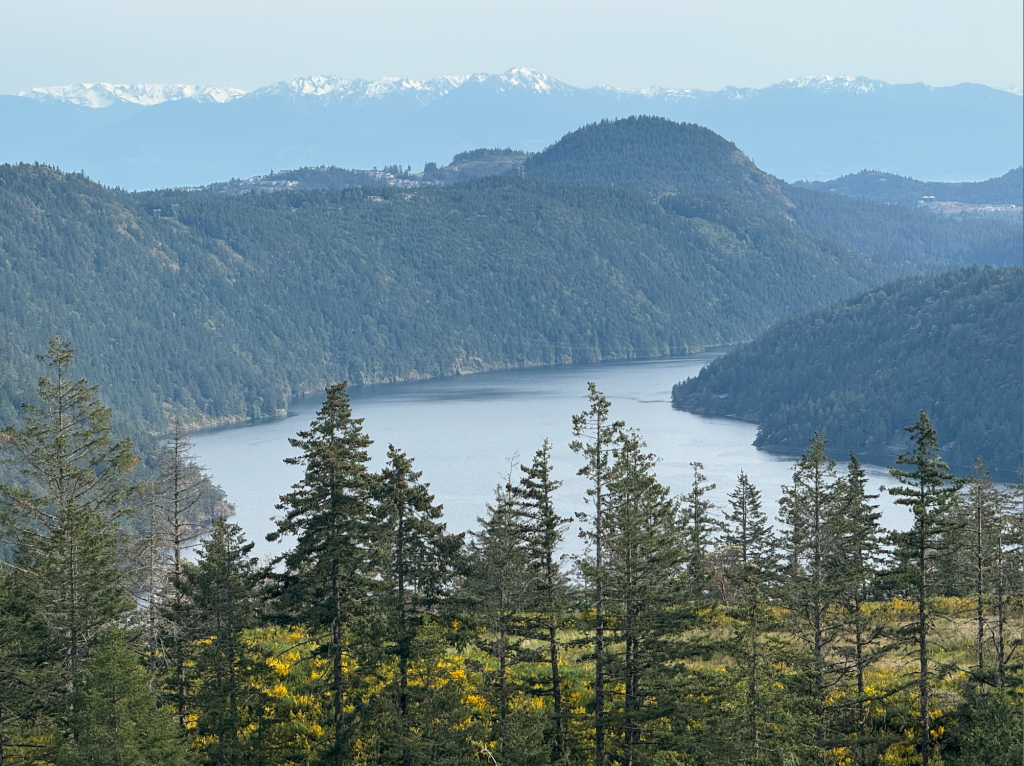
For those of us living on the West Coast, surrounded by the energy of this landscape, it’s a daily reminder that the wilderness outside us mirrors the wilderness within.
And both are sacred.
Re-Drawing the Map of Leadership
As modern leaders, we have the privilege of re-imagining what leadership looks like — one that’s collaborative, compassionate, and human.
The explorers mapped rivers and mountains; we map relationships and purpose.
They sought new worlds; we seek new ways of being in the world.
Our job isn’t to have all the answers, but to hold the compass steady — to guide others toward clarity, even when the terrain shifts beneath us.
Leadership is both navigation and surrender: knowing when to press forward and when to let the current lead.
Closing Reflection
When I look at the hand-drawn maps in Shoalts’s book, I’m reminded of the courage it takes to create something from nothing.
Those explorers didn’t wait for certainty; they began with curiosity and faith.
In our time, that same spirit is needed more than ever — in wellness, in business, in life.
To lead consciously is to say, “I don’t have the whole map, but I’ll keep walking.”
And just like those explorers, we will discover beauty, connection, and wisdom along the way.
Courage, after all, is not the absence of fear — it’s the act of moving through it with grace.