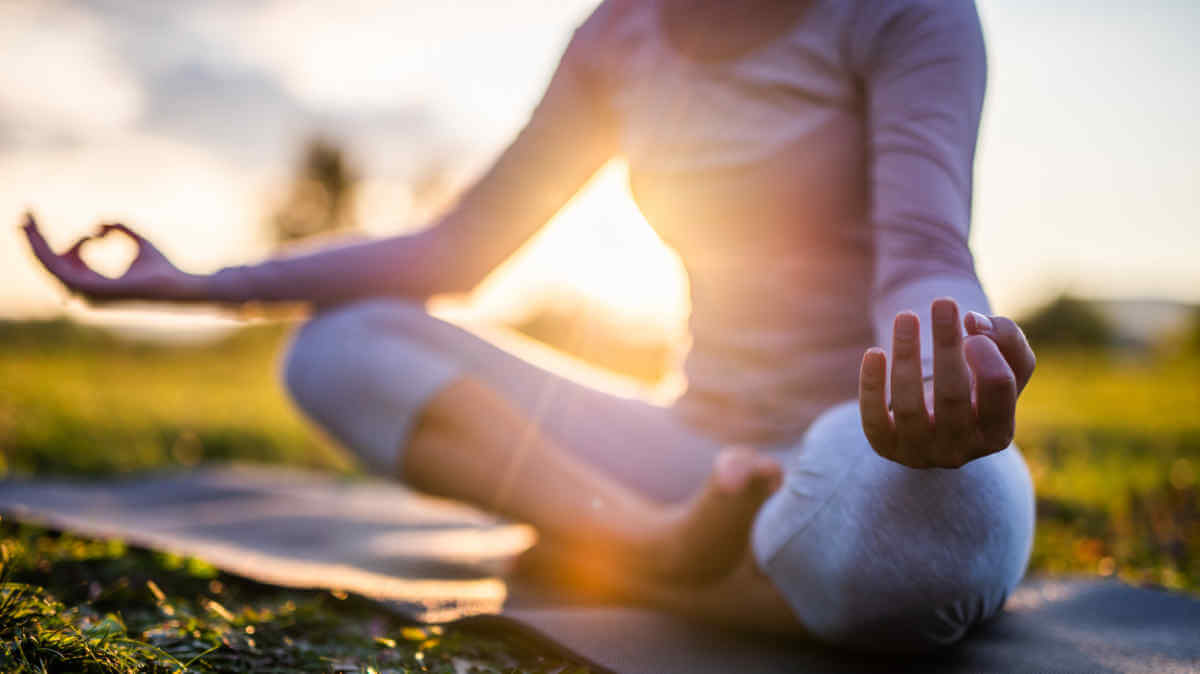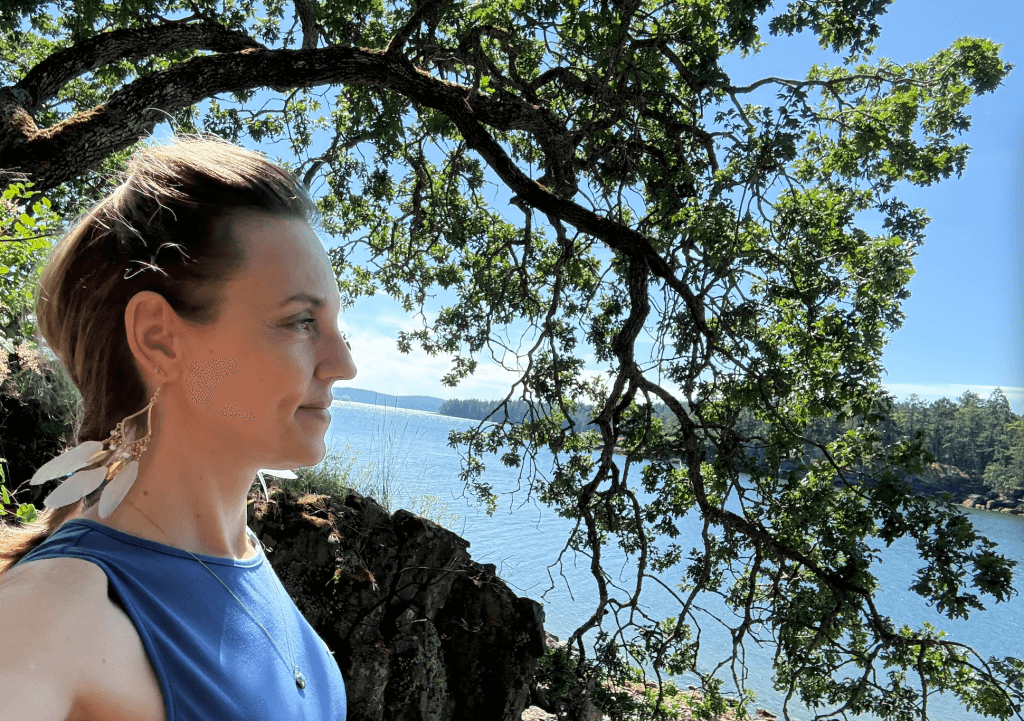
This morning, I rolled out my mat at Kind Yoga Society, a gentle sanctuary tucked into a quiet corner of Nanaimo. The room was softly lit, infused with the faint scent of sandalwood and stillness. Outside, November leaves tumbled in slow spirals, surrendering to the wind. There was something sacred about the simplicity of it — the steady breath of nature letting go, season after season, without resistance.
Our teacher began class by speaking about death and rebirth — not as distant, dramatic events, but as a cycle we move through every moment. “Every minute we live,” she said, “we move closer to death — and with each breath, we are also born anew.” Her words were both grounding and liberating.
I thought of the Buddhist teaching that life is impermanence itself. Everything we love, everything we fear losing, everything we cling to — all of it will one day transform. “All conditioned things are impermanent,” said the Buddha, “when one sees this with wisdom, one turns away from suffering.”
In that small studio, her voice wove together Eastern philosophy and the language of mindfulness — an invitation to sit peacefully with the truth that everything changes. The ego resists this, wanting to hold on to the familiar, but yoga teaches us another way: to open, release, and return.
The Wisdom of Letting Go
As we flowed through slow, meditative movements, I chose to focus on heart-openers — deep, expansive poses that counter the instinct to protect and withdraw. The chest lifts, the shoulders roll back, the breath deepens. In these postures, vulnerability and strength coexist.
My intention was simple: to stay open-hearted — for my community, for the people I serve, for life itself. To be able to hold space for both joy and pain, for growth and decay, without collapsing inward.
In yogic philosophy, the heart center — Anahata chakra — is the meeting point between the physical and the spiritual, the human and the divine. It teaches us compassion, balance, and interconnectedness. To live from the heart is to live courageously, even when uncertainty looms.
When I softened into camel pose, a wave of emotion rose unexpectedly — not sadness exactly, but tenderness. I realized how much energy it takes to stay guarded, how freeing it is to allow life to move through you. Like breath, love must flow — it cannot be hoarded.
Lao Tzu’s words came to mind: “When I let go of what I am, I become what I might be.” Letting go is not losing; it’s creating space for something new to arise.
Every Breath a Birth
In Buddhism, the awareness of death is not meant to frighten us but to wake us up. It reminds us of the fleeting, luminous nature of existence — each moment a tiny birth and death. In yoga, too, we practice this cycle every time we inhale and exhale.
The exhale is a small dying — a release, a surrender. The inhale is a return, a re-entry into life. Through breath, we experience what the Buddha called anicca — the impermanent, ever-changing rhythm of all things.
As our teacher guided us into savasana, the final posture of rest, I felt this truth pulsing softly through me. The practice is not just about stretching or alignment — it’s a rehearsal for life itself. Each class, each day, we die a little to the old, and are born again into awareness.
The Week of Awakening
Stepping off the mat, I felt a quiet awe. The kind that hums beneath the surface when you know life is moving in mysterious, beautiful ways. My week had been unusually rich in encounters and sensations — each one a reminder that connection is the heart of living.
Earlier in the week, I met a horse whisperer — a wild, intuitive soul whose son I support. The way she moved around her horses, with patience and trust, felt like witnessing a wordless meditation. The animals seemed to mirror her inner state: calm, alert, attuned. It struck me that connection doesn’t always require language; sometimes presence is enough.
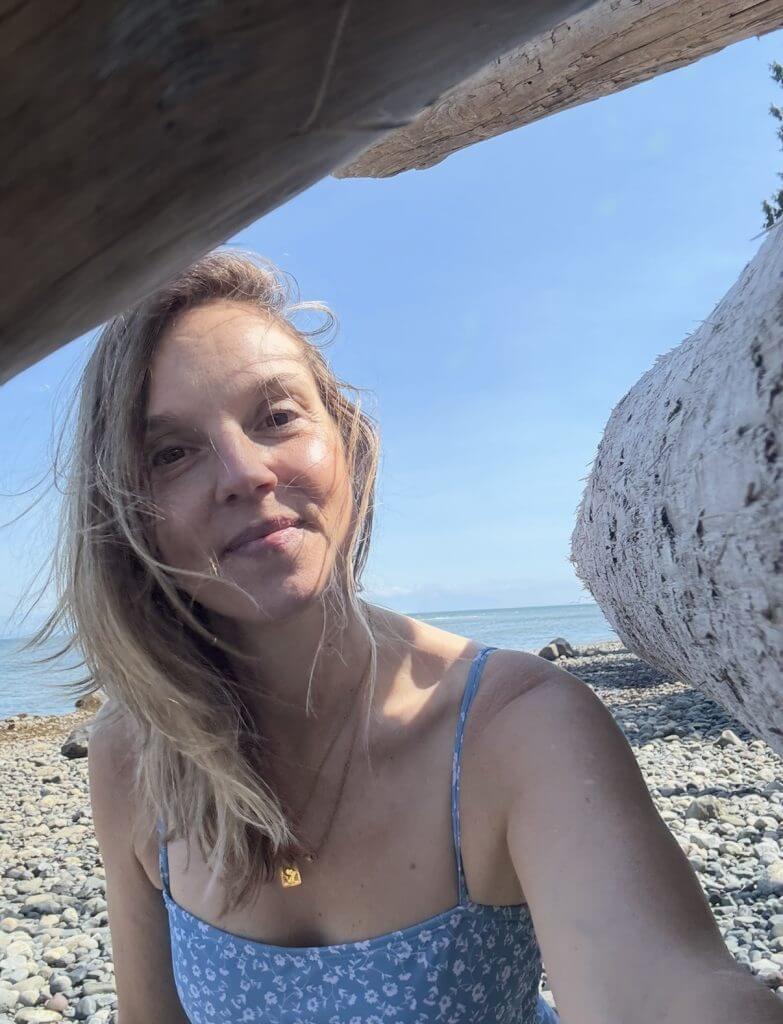
Later, I shared a healing session with a client in Victoria, sitting together on a rock by the ocean. The wind was fierce and wild, waves rushing against the shore. We stayed until we reached the heart of what needed to be said — that quiet, honest place where healing begins. When we finally walked back into the city, our coffee and soup tasted different — richer, deeper, like nourishment earned through truth.
Walking through Victoria’s cobbled streets, I felt the same undercurrent of aliveness. The city glowed in soft grey light, and I noticed how the old brick buildings and sea air carried a quiet wisdom — a reminder that beauty lives in both structure and surrender.
The Awe of the Unknown
As the week drew to a close, I found myself filled with a sense of wonder I hadn’t felt before — a deep awe for the unknown. It wasn’t anxiety or fear, but a kind of electric curiosity.
Who else will I meet? What other sensations await? What other deep, soul-stirring connections are just around the corner?
The philosopher Alan Watts once wrote, “The only way to make sense out of change is to plunge into it, move with it, and join the dance.” That’s what awe feels like — not standing apart from the mystery, but stepping into it fully, heart first.
In both Buddhist and yogic traditions, the unknown is not something to be conquered but to be embraced. Life, after all, is a series of unfoldings. When we release the need for control, we enter a deeper harmony with existence — one where curiosity replaces fear, and reverence replaces resistance.
Returning to the Heart
As I left the studio that morning, the air was crisp and bright. I walked slowly, savoring the rhythm of my breath. In yoga, we learn that mindfulness isn’t about perfection or peace that never wavers — it’s about presence. It’s about showing up for each moment, even when it trembles.
This week reminded me that every encounter, every breath, every ending is a teacher. That death and rebirth are not opposites but companions, guiding us toward deeper love, deeper truth, deeper living.
In the end, the greatest practice is to remain open — to breathe deeply into the mystery, to honor what falls away, and to trust in what is being born.
Because when we truly see impermanence not as loss but as movement — we begin to live not out of fear, but out of awe.