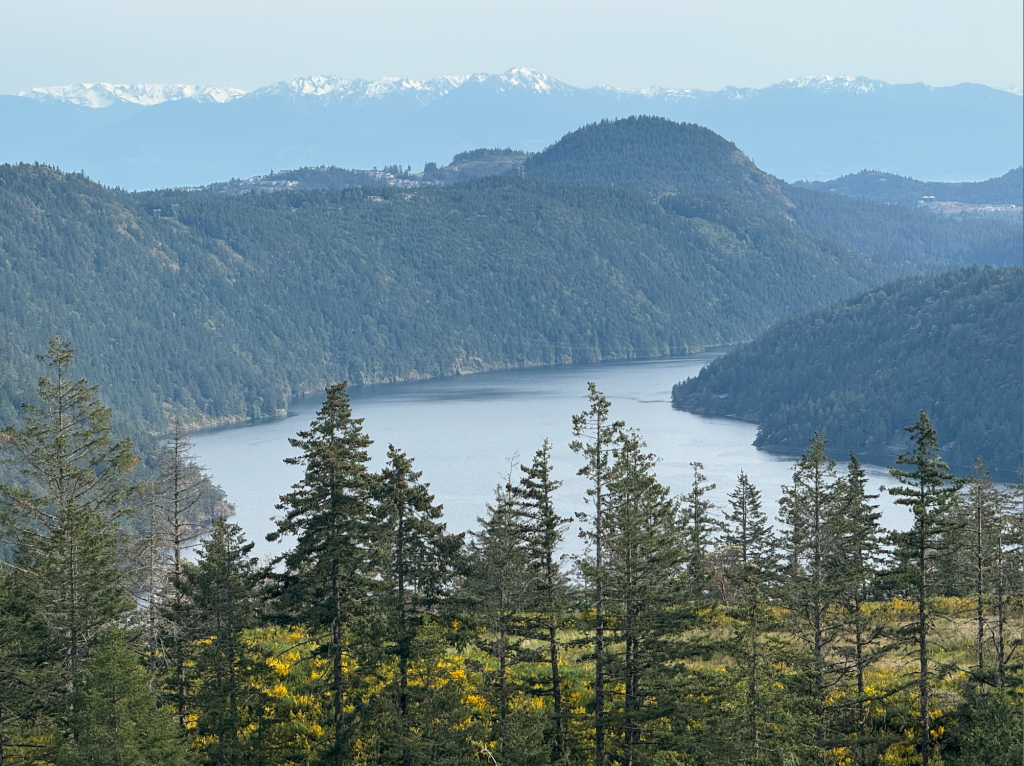
I moved to an island expecting solitude.
Not the romantic kind sold in travel brochures — but the practical version: fewer people, fewer invitations, fewer places to hide. I had imagined forests, shoreline, silence. What I hadn’t anticipated was how quickly silence becomes a mirror.
On Vancouver Island, community isn’t announced. It doesn’t arrive through organised introductions or polite small talk. It forms sideways — through weather, shared inconvenience, the quiet noticing of who shows up and who doesn’t.
The first neighbours I met didn’t ask what I did for a living. They asked how long I planned to stay.
It turns out that question carries weight here.
When anonymity falls away
In cities, anonymity cushions us. We can move through grief or change largely unseen, held together by routine rather than relationship. On the island, anonymity dissolves quickly. You are noticed — not scrutinised, but remembered.
Someone remembers how you take your coffee. Someone notices when your car doesn’t move for a few days. Someone leaves a bag of apples at your door without explanation.
This is not always comfortable. Belonging rarely is.
We often speak about community as something warm and affirming, but its quieter truth is accountability. Community asks you to be visible even when you would rather retreat. It asks you to stay present through awkwardness, grief, difference.
For anyone navigating mental health challenges, this visibility can feel exposing. There is nowhere to perform wellness convincingly for long. The rhythms of island life — the weather, the ferries, the seasons — insist on honesty.
The myth of self-sufficiency
Modern life prizes independence. We admire resilience, autonomy, the ability to carry on quietly. But in small communities, self-sufficiency is revealed as a myth.
When storms close roads or ferries stop running, individualism fails. You borrow generators. You share supplies. You check on one another not out of obligation, but necessity.
It’s here that the language around mental health begins to shift.
Rather than asking, Are you coping? people ask, Do you need anything?
This subtle difference matters. It reframes struggle as a shared condition rather than a private flaw.
Why place matters more than we think
There is a tendency in wellness culture to universalise solutions: mindfulness apps, routines, rituals that can be practised anywhere. But place shapes us more deeply than we acknowledge.
On the island, time stretches. Conversations linger. The natural world sets the pace. These conditions don’t eliminate difficulty — but they change how difficulty is held.
Research increasingly shows that community connection is one of the strongest protective factors for mental wellbeing. Yet we rarely discuss how environment enables or obstructs connection.
Urban design, work patterns, housing precarity — these are not abstract policy issues. They directly affect whether we are known to one another.
The courage to stay
Belonging isn’t instant. It is built through repetition: showing up to the same places, greeting the same faces, staying long enough for trust to develop.
In an age of mobility and reinvention, staying can feel like a radical act.
Staying means allowing yourself to be seen across seasons — not just at your most capable, but at your most human. It means resisting the urge to disappear when things feel uncomfortable.
That, too, is a form of courage.
A quieter definition of wellbeing
Wellbeing, I’ve learned, is not the absence of struggle. It is the presence of relationship.
It is knowing that if you withdraw too far, someone will notice — and not judge, but knock.
As conversations around mental health grow louder, perhaps what we need most is not more language, but more places that make connection unavoidable.
Not everyone can — or should — move to an island. But we can ask better questions about the environments we are creating, and what they allow us to carry alone.
Community doesn’t heal us by fixing our problems.
It heals us by refusing to let us disappear.