Migratory Birds on Vancouver Island: Following the Pacific Flyway
There are mornings on Vancouver Island when the sky seems to belong to the birds.
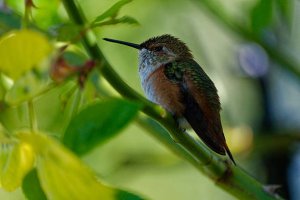 Along the shoreline, sandpipers move across the mudflats in shimmering flocks. Brant geese gather along coastal waters. In spring, Rufous Hummingbirds arrive with astonishing energy, while warblers and thrushes move almost invisibly through the forests.
For anyone interested in migratory birds on Vancouver Island, these seasonal movements offer another way of understanding the place. The Island isn’t simply a beautiful destination at the edge of the Pacific. It is part of a much larger ecological story.
Vancouver Island lies along the Pacific Flyway, one of North America’s major migratory routes. Stretching from the Arctic to Central and South America, the flyway connects a remarkable chain of coastal wetlands, estuaries, forests, grasslands and shorelines.
For birds travelling thousands of kilometres, Vancouver Island can provide something essential: food, shelter, nesting habitat and a place to rest before continuing the journey.
And for those of us lucky enough to live here, migration gives us a reason to look up.
Why Vancouver Island Matters to the Pacific Flyway
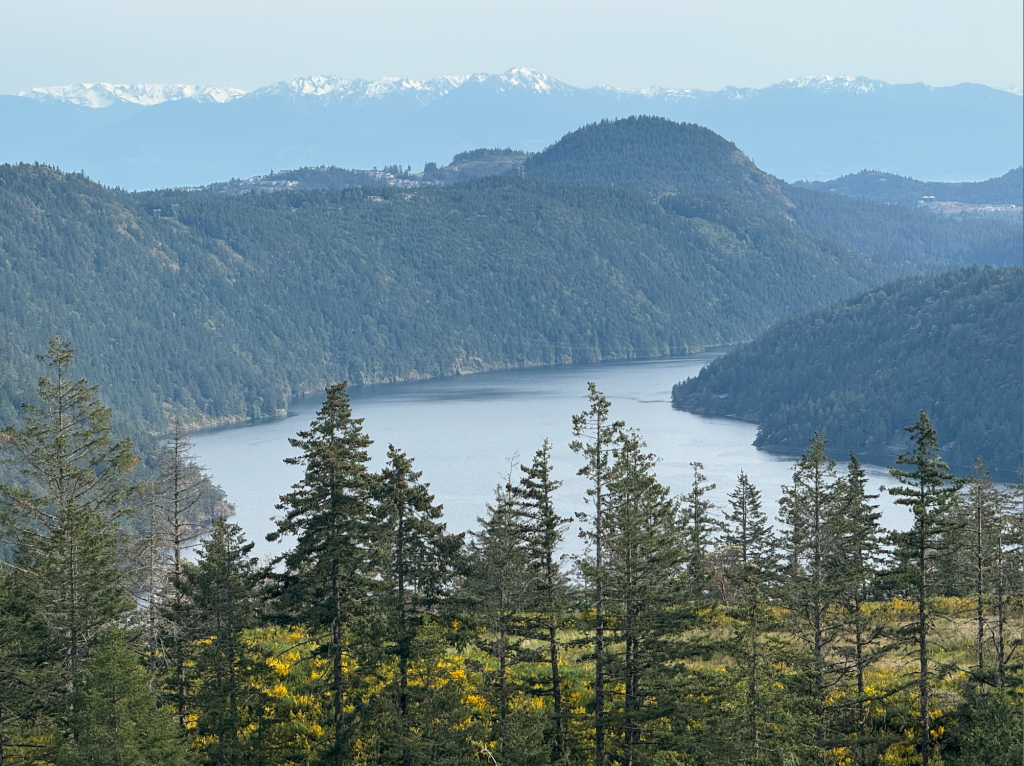
Vancouver Island stretches more than 460 kilometres from north to south, creating an extraordinary variety of habitats within a relatively small geographic area.
There are mountains and old-growth forests, rocky shorelines and sandy beaches, rivers, lakes, marshes, estuaries and tidal flats. Along the eastern coast in particular, the meeting of land and sea creates productive habitats where migrating birds can feed and recover.
Estuaries are especially important.
Where freshwater rivers meet the Pacific, nutrients collect and support an abundance of marine and terrestrial life. Mudflats provide feeding grounds for shorebirds, while eelgrass beds support species such as Pacific Brant.
Further inland, wetlands and forests offer habitat for raptors, songbirds and waterfowl.
The result is a landscape that functions less like a single destination and more like a series of interconnected stopping places along a continental highway.
When Do Migratory Birds Arrive on Vancouver Island?
Migration isn’t a single event. Different species arrive and leave according to their own rhythms, following food availability, weather and breeding cycles.
 Spring Migration
Spring brings a noticeable change to Vancouver Island.
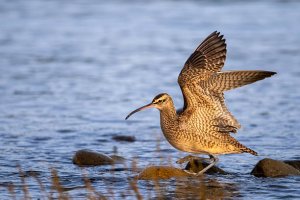
Birds begin moving north toward their breeding grounds, and species that spent the winter farther south return to the Island. Shorebirds gather along coastal habitats, while hummingbirds, swallows, warblers and other songbirds become increasingly visible.
For birdwatchers, spring is a season of anticipation. The landscape seems to become louder and more animated almost overnight.
Summer
Some migrants don’t simply stop on Vancouver Island—they stay.
Species such as Rufous Hummingbirds and Ospreys arrive to breed, while numerous songbirds establish territories in forests and open habitats.
Summer is therefore less about migration itself and more about the extraordinary variety of birdlife that the Island’s ecosystems can support.
Fall Migration
 By late summer and into autumn, the movement reverses.
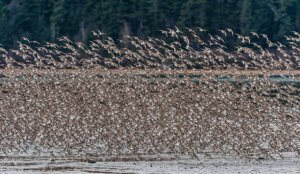
Birds begin heading south again, often gathering in impressive numbers along coastal wetlands, beaches and estuaries. Raptors take advantage of abundant prey, while shorebirds refuel before continuing their journeys.
There is something particularly compelling about autumn migration. The landscape can feel quieter to us as summer fades, while overhead and along the shoreline, an immense journey is underway.
Winter
Winter doesn’t mean the end of birdlife on Vancouver Island.
The relatively mild coastal climate allows many species to remain throughout the colder months, while other birds arrive from farther north to spend winter here.
For birdwatchers, that means there is no true “off season.”
20 Migratory Birds to Look for on Vancouver Island
The diversity of migratory and seasonal birdlife on Vancouver Island is remarkable. Here are some species worth watching for.
1. Pacific Brant
These small geese undertake an extraordinary migration between Arctic breeding grounds and wintering areas farther south. Along Vancouver Island, coastal eelgrass beds provide important feeding habitat.
2. Western Sandpiper
One of the smaller shorebirds, Western Sandpipers gather in flocks along coastal mudflats during migration, feeding on tiny invertebrates in the sediment.
3. Bar-tailed Godwit
Recognizable for its long bill and legs, the Bar-tailed Godwit is famous for its long-distance migrations and can be encountered in coastal habitats.
4. Black Oystercatcher
With its dark body, bright bill and pinkish legs, the Black Oystercatcher is particularly associated with rocky Pacific coastlines.
5. Sanderling
Look for these energetic little shorebirds running along sandy beaches, often just ahead of the waves.
6. Semipalmated Plover
Small and distinctive, the Semipalmated Plover can be found along coastal habitats during migration.
7. Red Knot
Red Knots undertake remarkable migrations and depend on productive coastal habitats along their route.
8. Marbled Godwit
This large shorebird has a long, slightly upturned bill and is associated with coastal wetlands, mudflats and other open habitats.
9. Greater Yellowlegs
Tall and elegant, Greater Yellowlegs are recognizable by their long yellow legs and distinctive calls.
10. Short-billed Dowitcher
Often seen probing muddy or shallow coastal habitats with its long bill, the Short-billed Dowitcher is another seasonal visitor to Vancouver Island.
11. Rufous Hummingbird
One of the Island’s most charismatic summer visitors, the Rufous Hummingbird arrives in spring after migrating north from its wintering grounds.
12. Orange-crowned Warbler
This small songbird can be found in a variety of habitats and is one of many warbler species that contribute to Vancouver Island’s summer birdlife.
13. Townsend’s Warbler
With striking yellow and black markings, Townsend’s Warblers can be found in forested habitats during the breeding season and migration.
14. Barn Swallow
Easy to recognize by its deeply forked tail, the Barn Swallow is a familiar summer visitor, often seen around open fields, farms and waterways.
15. Tree Swallow
These blue-green and white swallows are often associated with wetlands, lakes and other open areas where they can hunt insects.
16. Purple Martin
The largest swallow in North America, the Purple Martin can be found around suitable nesting sites, particularly near water.
17. Osprey
With their dramatic dives into the water, Ospreys are one of Vancouver Island’s most spectacular summer raptors. Many arrive in spring to breed.
18. Western Tanager
A colourful songbird of western forests, the Western Tanager is particularly striking during the breeding season.
19. Varied Thrush
The rich orange markings of the Varied Thrush make it one of the most recognizable songbirds of the Pacific Northwest.
20. Swainson’s Thrush
Often heard before it is seen, the Swainson’s Thrush is known for its beautiful, ethereal song and spends the breeding season in forested habitats.
Where to See Migratory Birds on Vancouver Island
One of the pleasures of birdwatching here is that you don’t necessarily have to travel far.
 Coastal estuaries, wetlands, beaches, parks and even urban green spaces can attract birds during migration.
Around Nanaimo, places such as the Nanaimo River estuary and Buttertubs Marsh provide important wetland habitat and opportunities to observe a variety of species.
Further north, the Parksville–Qualicum Beach area offers a combination of beaches, estuaries and wetlands that can be productive for shorebirds and waterfowl.
The Comox Valley is another excellent region for exploring the relationship between farmland, wetlands and coastal habitat.
On the west coast, the forests, beaches and coastal ecosystems around Tofino and Clayoquot Sound offer a completely different birding experience—one shaped by the wild Pacific coastline and temperate rainforest.
The key is often simply to slow down.
Bring binoculars. Walk the shoreline. Visit a wetland early in the morning. Learn to recognize a few calls.
The more attention you pay, the more you begin to notice.
Hummingbirds in Nanaimo
You don’t need to head into the wilderness to experience migration.
In Nanaimo and throughout much of Vancouver Island, hummingbirds can become regular visitors to gardens and flowering plants.
The Anna’s Hummingbird is particularly familiar because it can remain on Vancouver Island throughout the year. Males are unmistakable when the light catches their brilliant rosy-red throat.
The Rufous Hummingbird is a seasonal visitor, arriving in spring as part of its northward migration. Small, fast and fiercely territorial, they can make even an ordinary garden feel suddenly alive.
Other hummingbird species are possible but considerably less common, making an unexpected sighting all the more exciting.
For gardeners, planting native flowering species can help create habitat and food sources for hummingbirds and other pollinators.
Protecting the Pacific Flyway
The beauty of migration also reveals how dependent birds are on places that humans can easily overlook.
A wetland might appear insignificant on a map. An estuary may look like little more than mud at low tide. A patch of forest beside a growing community can seem expendable.
For a migrating bird, however, these places can be essential.
Habitat loss, urban development, pollution, climate change and the degradation of wetlands all put pressure on migratory species. Because birds cross enormous distances, protecting them requires cooperation across regions and borders.
The health of Vancouver Island’s birds is therefore connected to the health of its forests, rivers, wetlands, beaches and coastal waters.
Protecting one protects the others.
Look Up
One of the things I love about living on Vancouver Island is the way the natural world continually reveals itself when you slow down enough to notice.
A whale offshore.
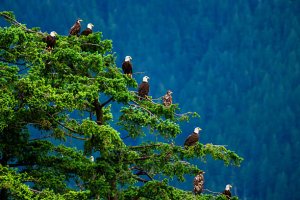
An eagle circling above the forest.
A seal disappearing beneath the surface.
And, sometimes, a flock of birds moving across the sky with such perfect coordination that you wonder how they could possibly know where everyone else is going.
The Pacific Flyway reminds us that Vancouver Island isn’t an isolated piece of land sitting at the edge of the Pacific.
It is part of a much larger living system.
Birds cross oceans and continents to reach the habitats they need. They return to coastlines, wetlands and forests year after year, following ancient patterns that existed long before our roads, towns and cities.
To watch them is to witness something both enormous and intimate.
And perhaps that’s one of the pleasures of living here: sometimes you don’t have to go anywhere at all.
You just have to look up.