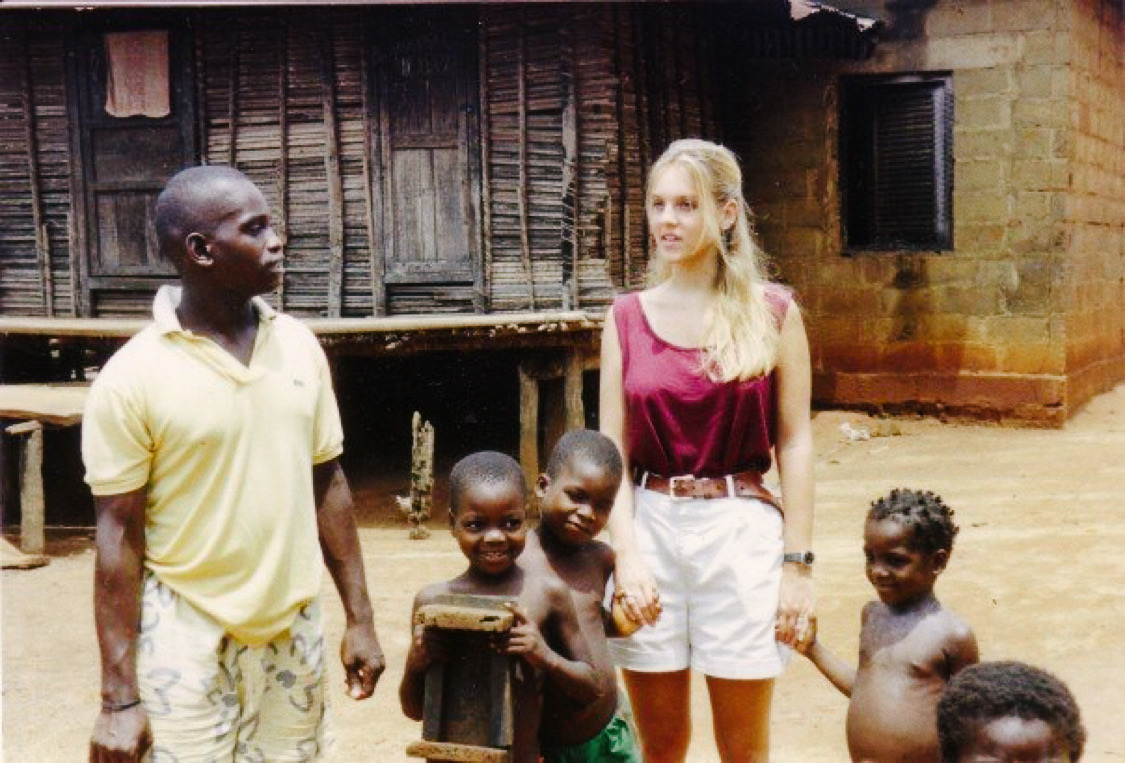
I was born in Uganda during a time when Idi Amin was kicking out British nationals. Needless to say, we didn’t stay long. My family left when I was a child and, for the next 35 years, Uganda lived somewhere in the back of my mind as the place I had come from but barely remembered. I had been dreaming about going back for years and, in 2008, I finally did.
At the time I was living in Vancouver, working as a manager in hospitality, but somewhere along the way I had developed a calling to do something philanthropic. I’m not entirely sure where the calling came from, but I was determined to follow it. One of the girls where I worked connected me with a young woman who connected me to an orphanage she was supporting. One connection led to another, which was to become something of a theme for the trip.
The day I arrived in Uganda, I had three contacts in my phone.
Three.
This seemed perfectly adequate at the time.
I felt prepared for Africa with a MEC mosquito net, seven bruises on my arms where my jabs had been administered and a whisky flask. What more could a girl need?
Nairobi airport was as disorganized as a beehive that had lost its queen—complete chaos! The redeeming virtue was that the workers all seemed to know the routine so well that they somehow kept us in check. Rather than losing my patience, I found myself relishing the scene. It felt familiar. Very familiar.
I was stepping back into a culture that seemed to activate parts of my hypothalamus that had long fallen asleep. French, English, Swahili… Cotonou, Benin, Côte d’Ivoire… countries I had known as a child. Benin—wasn’t that where my hair turned green from the chlorine?
And suddenly I thought, Ah, I’ve missed you.
The sun was shining. The dreary rain of Vancouver and London lifted and, along with it, my mood. Mmmm. Welcome sunshine.
At Entebbe airport, immigration was surprisingly easy and, as I waited for my luggage, I began wondering how much a taxi to Kampala should cost so I wouldn’t be ripped off. Drawing on previous African experience, I figured striking up a conversation was probably my best bet. I approached a kind-looking Indian woman and asked her what I should expect to pay.
She told me.
I thanked her and walked away.
Then she came after me.
“You’re going to Kampala?”
“Yes.”
“I’ll take you.”
And just like that, I had acquired an African godmother.
Outside the sliding doors was a hoard of taxi drivers, but I walked through them in the safe hands of my new protector. On the journey we chatted about where we had been and why we had left Uganda. It turned out she had also been forced out during the Amin regime and had sought refuge in Mombasa around the same time my family had left.
I told them I lived in Vancouver.
They knew someone from Vancouver.
I knew the person they knew.
Within minutes we were discussing Kampala nightlife and a nightclub owner called Aly Tight. I never did quite hear the explanation of the nickname because I was too busy staring out of the window thinking, Woooo hoooo. I’m off to see the gorillas.
Somehow I had managed to secure the last two permits for the dates we were travelling.
I was back.
And Uganda was already doing that thing it does where six degrees of separation becomes more like one and a half.
My first night in Kampala I checked into my hotel and headed down to the local pub. It was called O’Leary’s and was right next door to where I was staying. One night I had been woken by some seriously blaring music and, after getting over my initial grumpy urge to march over and tell them to TURN IT DOWN, I realized it sounded like a live band and, actually, they were pretty damn good.
So that’s where I went the following night.
I had a T-bone steak at the bar, scribbled in my diary and politely answered the questions of the bar boys. Then a young African man sat down beside me. He told me he had two years left at school and wanted to enter the quiz, but they needed to be in a group.
“Yes, I suppose two isn’t much of a group.”
He went off to find one.
Before I had a chance to escape, Mr O’Leary himself appeared and insisted I join his team of two.
The game started.
Our team grew.
By the end of the evening there were fourteen of us.
There was Aldo, an ex-British military man who had lost a leg doing bomb disposal in Lebanon; a couple of CEOs; O’Leary, who was actually called Declan Peppard when he wasn’t running the pub; his honey, whose name I can’t remember but whose exotic name was far more memorable than mine; Barrie and Karen Cambridge; Henry, the South African who did a fabulous job in a beer-downing face-off; and Ernesto, the cheerful Mexican with an MBA who invited me to a traditional African wedding because, apparently, it would be “such a unique experience.”
I looked at him.
“This is your first time in Africa, isn’t it?”
“Yes,” he said enthusiastically.
I politely declined the invitation. In Spanish.
Halfway through the evening, the champagne appeared.
Somewhere between the quiz, the champagne and the increasingly questionable shots, the evening had turned into a celebration of my return to Uganda. I remember looking up at the star-lit sky, wearing a T-shirt and flowing skirt, feeling warm and completely content.
I got home around 2 a.m.
Well, nearly.
The gate was locked, the night watchman was asleep and I found myself climbing over it, feeling like a teenager sneaking back in. I was contemplating how I was going to get over the spikes at the top when the watchman finally woke up and let me in.
The next morning I was woken by tropical birds and children from the neighbouring school chanting:
“Good morning to you.”
“Good morning to you.”
Then the teacher asked, “And how old are you?”
“Four!”
“Three!”
“I am three!”
“My sister is five!”
I lay there listening and thought: Yep. I’m definitely in Africa.
The next day Geoffrey, the orphanage director, picked me up and we set off for New Hope School.
Getting there was an adventure in itself. We took three matatus—local buses that seem to operate according to a principle known only to themselves—and what should have been a relatively straightforward journey took about four hours. In a car it would have taken around 25 minutes. At one point we sat completely stationary for forty-five minutes in a traffic jam before abandoning the bus and walking through a market to find another one.
Eventually we arrived.
I had come prepared to help.
I wasn’t quite prepared for what that actually meant.
That evening they offered me a shower.
A bucket of water in the corner of the room.
Then they gave me their room.
I was shown to the bed and did my best to settle in, but I couldn’t. At some point a woman and a child came into the room and lay down on the floor beside me.
I stared at the ceiling.
This was their room.
Their bed.
Their home.
And I was lying in it because I had arrived from Canada with the intention of helping them.
I felt profoundly uncomfortable.
Sleep wasn’t really going to happen.
The following morning I was offered a boiled potato for breakfast.
There was no coffee.
I repeat: there was no coffee.
This was beginning to feel like a serious situation.
Once we’d got settled, Geoffrey and I spent the morning trying to work out how I could help. I had arrived with a vague idea that I would be useful, but it quickly became apparent that the job was somewhat bigger than I had anticipated.
The roof needed work. The bunk beds were triple bunks and needed new mattresses. The rooms needed attention. There were basic infrastructure problems everywhere.
I suspect Geoffrey was hoping that somewhere in my luggage I might also have packed some handyman skills.
He was to be disappointed.
When we established that neither of us was going to solve the problem by standing around looking at the roof, we started talking about the day-to-day running of the school.
This was where things became interesting.
Rather than simply asking what they needed, I began asking why they needed it.
I looked at the finances. Where was the money going? What were the school’s goals? What did the children need most? What were the practical obstacles to achieving those goals?
Geoffrey explained that at the beginning of term he travelled for hours by bus to collect students individually. He travelled long distances to collect food and supplies. There was no reliable way to transport larger items the school needed.
The answer seemed fairly obvious.
A van.
Not glamorous. Not particularly photogenic. But useful.
I told Geoffrey that I would go back to Kampala, organize a fundraiser and try to get them one before I left.
He took my hand, smiled and said, “God willing.”
I liked him immediately.
I also started thinking about something else. Even if we managed to finish building the school, there would always be ongoing costs. Someone would have to pay for the food, the beds, the water, the transport, the things that never make it into the glossy photograph.
They needed to find a way of generating income.
It was a lesson I think I understood instinctively: good intentions are lovely, but sustainability is rather more useful.
So I decided to spend less time at the orphanage and more time in Kampala trying to make something happen.
And somehow, my three-week trip to Uganda turned into a fundraising campaign involving dog racing.
I am still not entirely sure how that happened.
There was an auction, tote sales, a casino, raffle prizes, a helicopter ride around Kampala, flights to Kilimanjaro, a flying lesson and quite a lot of people getting excited about dogs running around a track.
Sarah, a chiropractor and self-confessed Africa bum, threw herself into the whole thing. Charlie, who seemed to have his finger on the pulse of Kampala, offered his contacts and helped make it happen.
At various points I stopped and thought, How exactly did three weeks in Kampala get me to this?
But it worked.
We didn’t raise quite as much as we had hoped.
We raised enough.
Eventually New Hope had a small mini-bus.
A bright, shiny bus.
And I had one of those lovely moments when something that exists only as an idea suddenly becomes real.
Years later, Geoffrey would send me a photograph of it sitting on the school campus, along with a message telling me that the children loved me and were looking forward to seeing me again.
Something that had begun with three contacts in my phone had become a bus.
But the thing I remember most about Uganda isn’t the poverty.
It is the abundance.
A few days later I found myself at Ndali Lodge, overlooking a crater lake, walking through what felt like the Garden of Eden.
Lulu’s Garden of Eden, to be precise.
We walked through plantations and forest, passing flame trees, vanilla, cacao, coffee flowers, guava, papaya, bananas, yams and an English rose garden that seemed almost comically out of place. We spotted Great Blue Turacos and monkeys, crossed a bog to find cardamom and followed the scent of wild jasmine. There were white butterflies floating along the path and a spider’s nest the size of a human being.
At one point we sat around Lulu’s table looking at cacao beans.
This became unexpectedly exciting.
Clare and Daniel had discovered the joys of raw chocolate and had brought some for Lulu to taste. Daniel, who had an MBA and was taking cacao extremely seriously, became animated to the point where I began wondering whether he had lost his grip on reality.
He announced that the cacao beans were better than the raw chocolate.
I stared at him.
I was eating the chocolate.
He was eating the beans.
There was clearly a difference of opinion.
The whole thing felt like Show and Tell at Playschool. We were all ridiculously enthusiastic and somehow completely carried away by the moment.
Then Lulu took us through her garden and explained vanilla production. Each flower had to be hand-pollinated. The beans were blanched, wrapped in blankets to sweat, dried in the sun and then wrapped again. The whole process took around thirty days.
I was fascinated.
But I was even more fascinated by Lulu.
She was gentle and unassuming, yet there was clearly enormous strength underneath it. She had built this extraordinary plantation almost single-handedly, creating something beautiful and productive from the landscape around her.
That evening I gave her a reflexology treatment beside the starlit pool. Later, over dinner, she talked about the ups and downs of running a vanilla plantation.
I remember thinking that this was the Africa I wanted to know.
Not simply the Africa of hardship.
The Africa of people making things.
Growing things.
Building things.
Creating lives.
Then there were the gorillas.
We hiked for two hours into the Bwindi Impenetrable Forest to find them. The trek was arduous, and there was an octogenarian in our group whose pace didn’t quite equal a snail’s pace in a rainstorm. The porters eventually had to take turns carrying him.
There were times when our group felt like the cliché of Japanese tourists, cameras poised and ready to pounce on the perfect picture, while I was secretly thinking that perhaps I would rather just kick back and have a cup of tea with the gorillas.
The gorillas, for their part, seemed to agree that we were making rather too much fuss.
They just wanted to be left alone to chomp peacefully on their shrubs.
The whole trip was magical. We camped in the forest, heard invisible children calling “How are you?” from somewhere beyond the trees and met people who seemed to appear and disappear as effortlessly as the mist.
Two German men had come to the forest for the birds rather than the gorillas. They had somehow managed to secure a night camping in the forest so they could get up at dawn to see a particular bird. As it turned out, they were the lucky ones. They didn’t pay the steep gorilla fee and a group of gorillas wandered into their camp anyway.
I thought that was rather wonderful.
Sometimes the universe has a sense of humour.
When I wrote about the trip at the time, I described it as phenomenal, enriching, magical, adventurous and fulfilling.
It was all of those things.
But looking back now, I think something else was happening.
I had gone back to Uganda after 35 years believing I was returning to a country.
Instead, I was returning to a part of myself.
Thirty-five years is a long time to be away from somewhere. Long enough for a country to change. Long enough for a child to become a woman, live in eight countries, build businesses, fall in love, lose people, start again and collect enough stories to fill several lifetimes.
I had become very good at leaving.
Perhaps too good.
For much of my life, movement was part of my identity. A new country gave me a new landscape, new people, new possibilities and, perhaps most seductively, a chance to discover another version of myself.
I thought I was an explorer.
I am.
But I’ve come to understand that I was never particularly interested in collecting destinations.
I wanted to know places.
I wanted to sit at the bar and talk to the person beside me. I wanted to know what people ate, where they went on a Friday night, who knew whom, what grew in their gardens and what happened when the rain came.
I wanted to wander.
I wanted to get slightly lost.
I wanted to be invited somewhere I hadn’t planned to go.
I wanted to participate.
And, if I’m honest, I wanted to belong.
Even if only for a little while.
That trip to Uganda was when I began to understand that place is more than geography.
It is sound and smell and weather and memory. It is the way your body recognizes somewhere before your brain does. It is the feeling of warmth on your skin after years of grey rain. It is the stranger who offers you a ride. It is children in bright school uniforms running along the roadside. It is a woman quietly building a vanilla plantation. It is a ridiculous quiz night that turns into champagne.
It is the people you meet who somehow become part of your story.
And perhaps most importantly, it is what a place awakens in you.
I didn’t know it then, but this would become one of the great themes of my life.
I would keep moving.
I would keep looking.
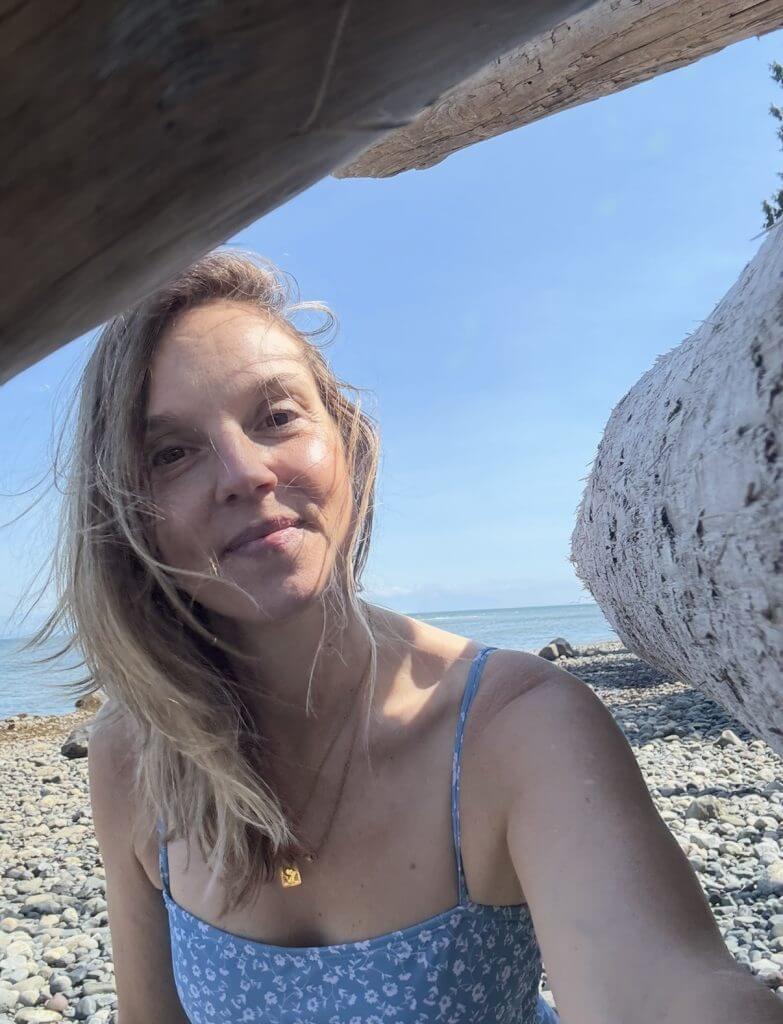
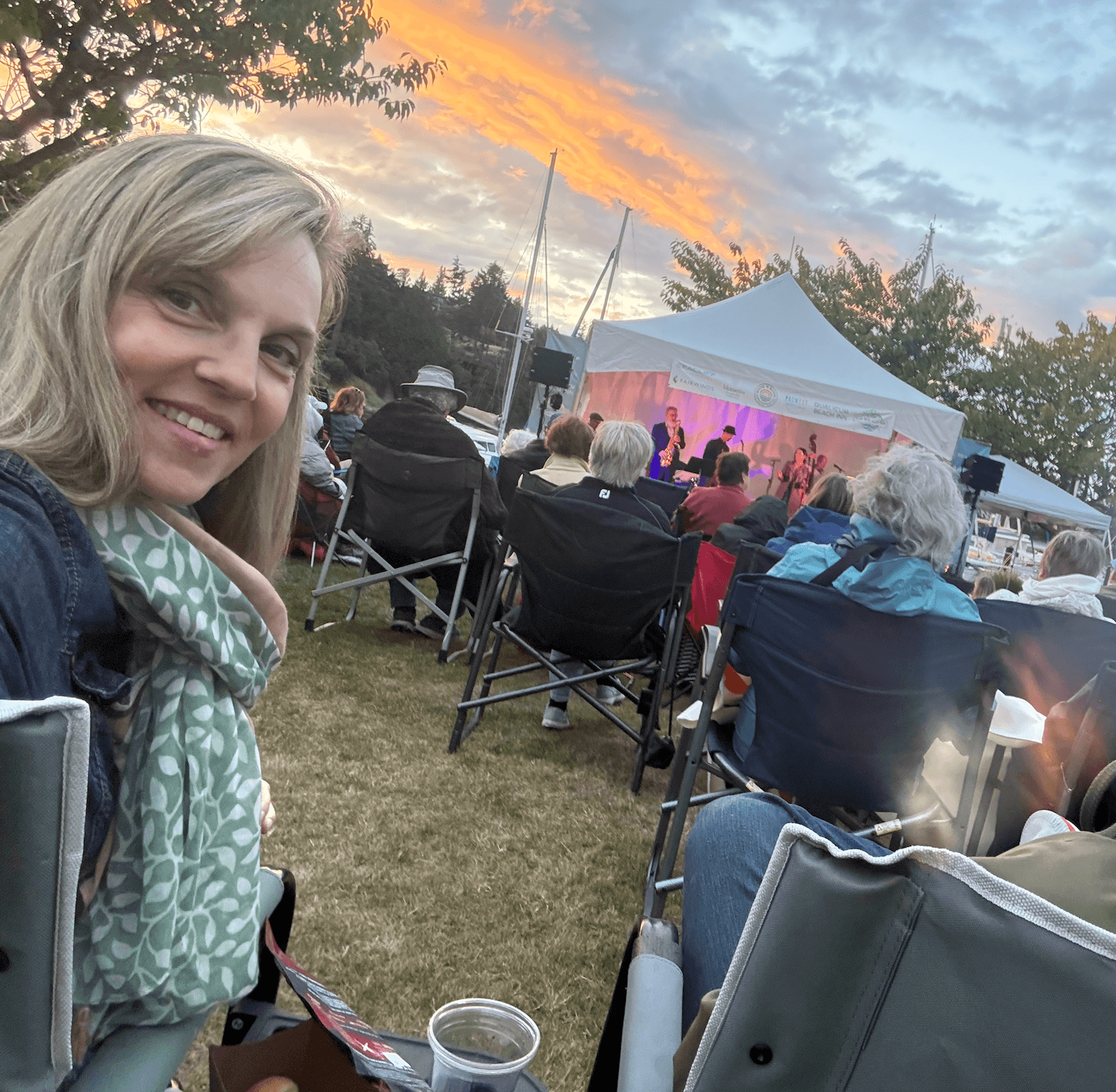
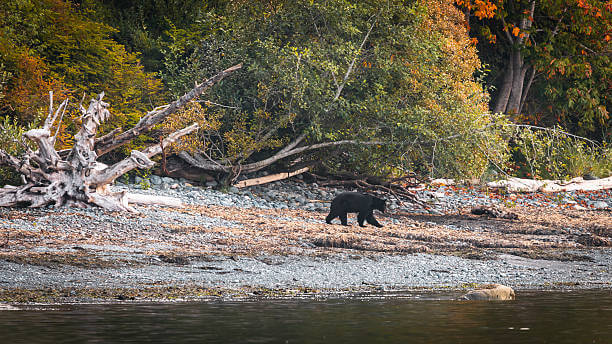
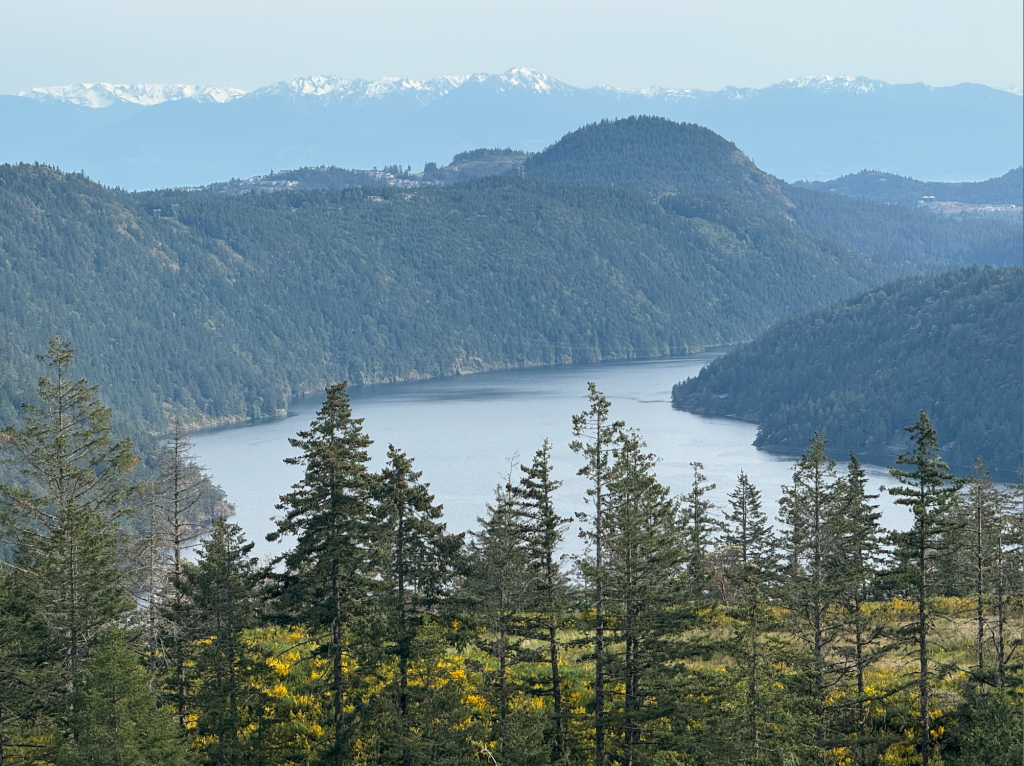
And eventually, decades later, I would arrive on Vancouver Island.
Only this time something was different.
I hadn’t stopped exploring.
I had simply found somewhere worth exploring slowly.
Three years into island life, I can see that perhaps I was never looking for somewhere to live at all.
I was looking for somewhere that would wake me up.
Uganda did that.
So did many of the places that came after.
And now, strangely enough, Vancouver Island does it too.
Maybe that’s what the places that make us do.
They don’t necessarily ask us to leave.
Sometimes they finally teach us how to stay.