On moving somewhere new, finding our people, and learning that belonging doesn’t require them to look like us.
When you’re moving to Vancouver Island, or anywhere that feels culturally different from what you know, I think you instinctively look for mirrors. We look for people who remind us of ourselves — people who understand our references, our humour, our idea of a good dinner, our instinct to explore. It makes sense. Moving is disorienting. However exciting a new place may be, there is a period when everything that once felt ordinary becomes unfamiliar: the way people dress, the way they speak, what they eat, how they socialise, what they consider normal. So we look around and search for the familiar in other people’s faces.
When I first moved to Vancouver Island, I noticed how casually people dressed. I had come from a fairly suited-and-booted city life, and the degree of informality was, initially, a little startling. I don’t mean that as a criticism. It was simply different. And when somewhere feels culturally different, even small things can make you feel like an outsider. So, naturally, I started looking for my people.
 The trouble is, you can’t always see them at first glance. There was the lovely woman whose family roots came from England and who loved beans on toast. There she was: a tiny piece of home. There was the tall, elegant woman, married to a Frenchman, effortlessly chic, well travelled, with a bucket list that included visiting at least five different places every year. Another familiar point of reference. Then there was the local girl who had never travelled particularly far but loved going on cruises. She knew everyone, was wonderfully friendly and seemed to possess that particular warmth of someone who has spent her life in a community where people look out for one another.
There was also the woman who had grown up in Singapore, whose grandmother still lived there, and whose education and upbringing gave us another shared reference point. These little recognitions are comforting. They tell you that perhaps you haven’t left everything behind after all.
But some of the people who eventually became part of my life here were people I might never have identified as “my people” from across a room. One was a half-Japanese woman I got to know because we had to carpool for six months. She wasn’t especially chatty at first. Six months of commuting together changes that. When you are sitting beside someone for more than an hour, day after day, there is only so long you can maintain a first impression. Eventually you talk about your lives, your families, your frustrations, the things you love and the things that make you laugh. Somewhere along the way, you discover that you have much more in common than you ever imagined.
There was another colleague, Filipino, who had grown up with a strict upbringing and was an absolute workaholic. Again, the first impression didn’t tell the whole story. Six months of long commutes did. I began to realise that perhaps I had been looking for the wrong thing. I had been looking for people who looked like me. What I was actually finding were people who understood something about me. There is a difference.
One of the most important friendships I have made here began with another kind of recognition. My German friend had moved from Zürich, a vibrant and international city, and she found the transition difficult too. We understood that feeling: the peculiar experience of coming from somewhere cosmopolitan and suddenly finding yourself in a place where life operates according to a completely different rhythm.
Then our mothers entered the story. Her mother came to visit, discovered that my mother-in-law lives with us, and invited us out for tea. We discovered another point of connection: both families are religious. One small invitation led to another, and gradually a friendship formed. Now our husbands are best friends and we are best friends. Their house has become one of those places where some of our favourite evenings happen: themed parties, murder mysteries, ridiculous costumes, laughter, food and the sort of hospitality that makes you feel you belong before you have quite worked out why.
We found each other partly because we were mirrors. But the longer I live here, the more I think the mirrors are only the beginning.
I think about another couple who became part of our social world. She was from Holland; he had German roots and was half Mexican. They were dancers — proper dancers, the kind of people who could change the atmosphere of a party simply by getting onto the dance floor. They were the life and soul of our gatherings. He was in his fifties and they were beginning to make plans for retirement. Then he died suddenly from a heart aneurysm.
She went back to Holland for a couple of months, trying to process the shock of losing not only her husband but the future they had been planning together. His death changed the shape of our community. There was suddenly an absence where there had been movement, laughter and dancing. It reminded me that community isn’t an abstract concept. It is made from people: specific people, the people who turn up, the people who invite you in, the people whose stories become part of yours and, eventually, the people whose absence you feel.
Our neighbours have become another version of family. One is from New Zealand and the other from the United States. There is an Iranian couple who always seem to arrive with a karaoke machine. There is a new couple who have moved from Saskatoon, working incredibly hard and building their own house. Different countries, different histories, different lives. Yet somehow we end up in the same kitchens, around the same tables, sharing the same jokes.
Perhaps that is when something starts to shift. You stop trying so hard to recreate the world you came from and start creating a new one.
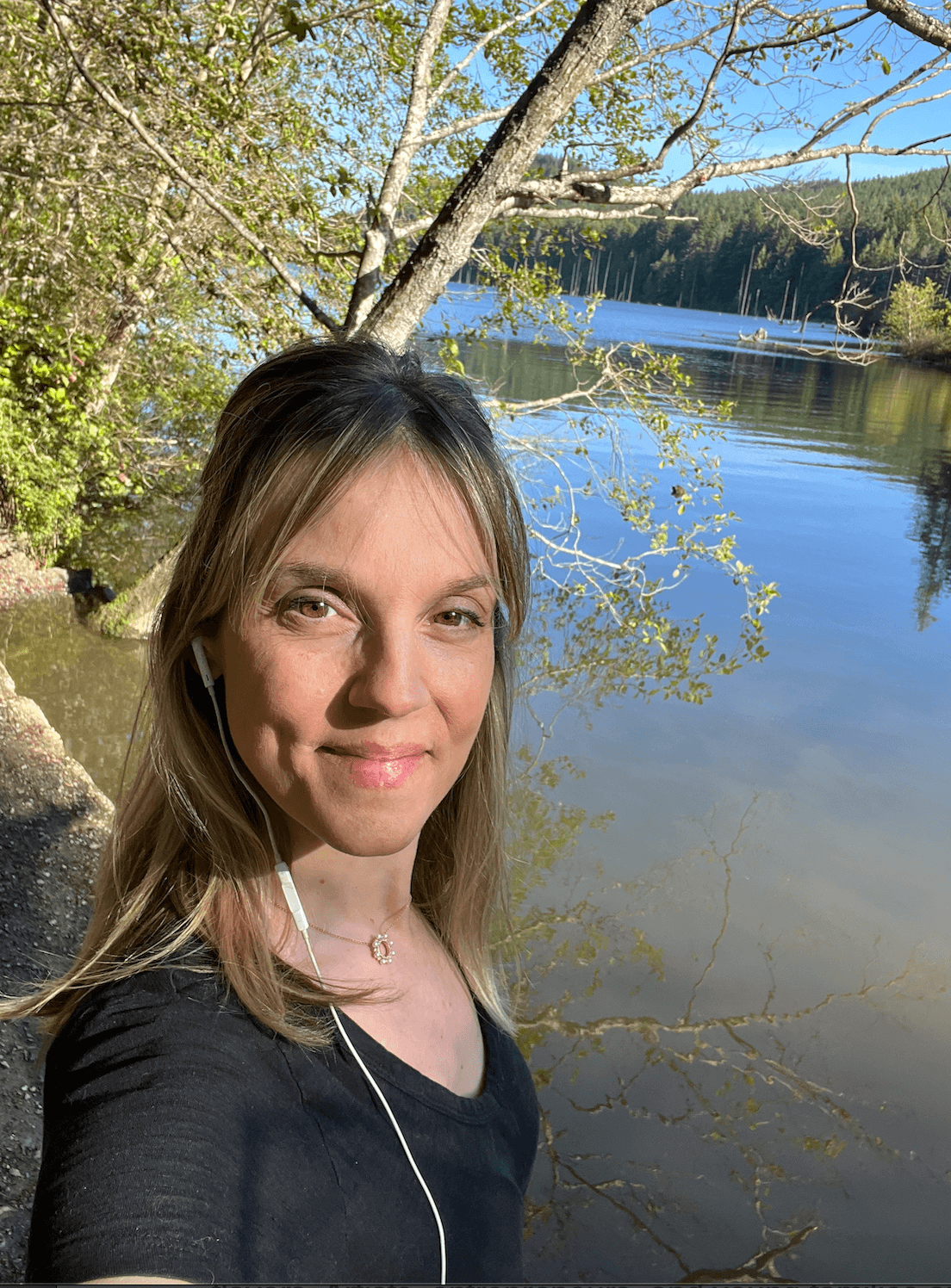
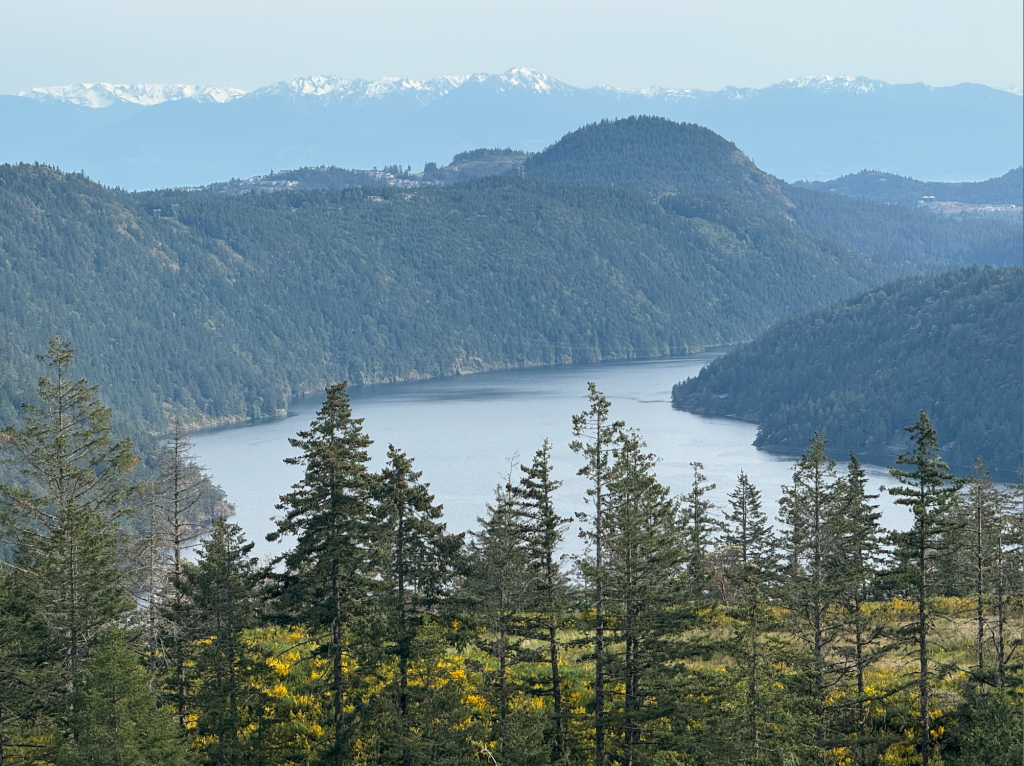
I notice the change most clearly when I walk around Westwood Lake. When I first started walking there, I remember feeling strangely sad. The lake was beautiful, but I felt separate from it. I saw a landscape. I didn’t yet see a community.
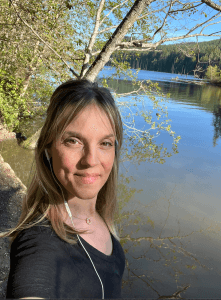 Now I walk around that same lake and find reflections everywhere. The cheerful person who says hello when I’m feeling cheerful. The beautifully groomed young jogger whose physique reminds me of my own. Families laughing together. The young man who looks as though he has stepped straight out of Scotland, wearing a kilt and tweed jacket. I’ve only seen him once, so perhaps he was visiting. Children speaking French or Spanish as they walk. People carrying accents, gestures and histories from places I may never have visited.
And then there are the First Nations people, whose presence reminds me that there are histories here far older and deeper than mine. They aren’t mirrors of me. But they are part of the place I now call home.
That distinction matters. Because perhaps belonging isn’t actually about finding enough people who resemble us. Perhaps it is about becoming comfortable enough in ourselves that we no longer need the reflection.
I’ve lived in eight countries. I’ve been the newcomer more than once. I’ve arrived with suitcases and expectations and assumptions about what a place would be like. Each time, there has been that initial instinct to find the familiar. But Vancouver Island has made me think differently about what it means to belong.
The people who have become important to me here don’t form a neat demographic. They aren’t all British. They aren’t all travellers. They aren’t all international. They aren’t all anything. What connects us is not where we came from. It is what has happened between us since we arrived: the long car journeys, the invitations, the cups of tea, the parties, the dancing, the losses, the laughter and the small kindnesses that accumulate until one day you realise you have a history with people.
Perhaps that is the point at which somewhere new begins to feel like home. Not when the landscape becomes familiar, not when you stop missing the place you came from, and not even when you finally stop noticing the differences, but when the unfamiliar becomes populated with people you know.
When a walk around a lake is no longer just a walk around a lake because you recognise the faces passing you. When you know who will bring the karaoke machine. When you have friends whose parents come to visit. When someone invites you for tea. When a couple’s sudden loss leaves a hole in your social world. When you realise that the people around you have become woven into your life.
I think we arrive somewhere new looking for mirrors because mirrors reassure us. They say: you are not so far from home after all. But perhaps the real gift of staying is learning to look beyond the mirror: to become curious about the people who don’t resemble you, to listen to their stories and to allow a place to change your understanding of what familiar can mean.
Because eventually, if you stay long enough, the question changes. You stop asking, Where are my people? and start asking, Who are the people who are becoming mine?
Perhaps that is how belonging happens. We arrive looking for mirrors. We stay long enough to discover windows.