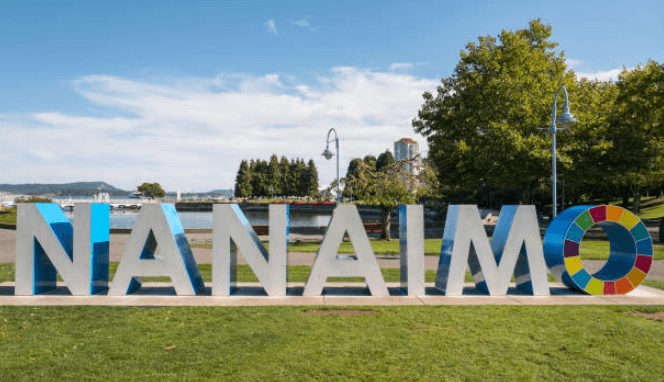
Can Nanaimo Grow Without Losing What Makes It Special?
What Nanaimo’s approach to sustainability says about building a city people actually want to live in.
When people talk about sustainable cities, the conversation often turns to futuristic infrastructure, electric vehicles, high-density housing and ambitious carbon targets. We tend to imagine sustainability as something that arrives with a master plan, a new transit system or a particularly impressive collection of solar panels.
Living in Nanaimo has made me think about it differently.
Here, sustainability feels less like a futuristic concept and more like a question of how you grow a city without losing the things that made people want to live there in the first place.
That matters because Nanaimo is changing.
It is no longer simply a stopping point between Vancouver and the rest of Vancouver Island. More people are discovering the city, businesses are growing, neighbourhoods are developing and the pressure to accommodate that growth is becoming increasingly visible.
The challenge is familiar to cities everywhere: how do you welcome more people and more economic activity while protecting the natural environment, community life and quality of life that attracted people in the first place?
For Nanaimo, the answer appears to be emerging through a combination of policy, community action and something less tangible — a culture that is deeply connected to the landscape.
A City Shaped by Its Landscape
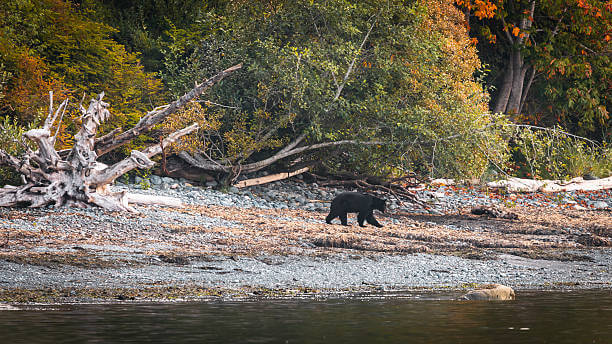
One of the advantages Nanaimo has is that nature isn’t something that has to be added to the city.
It is already there.
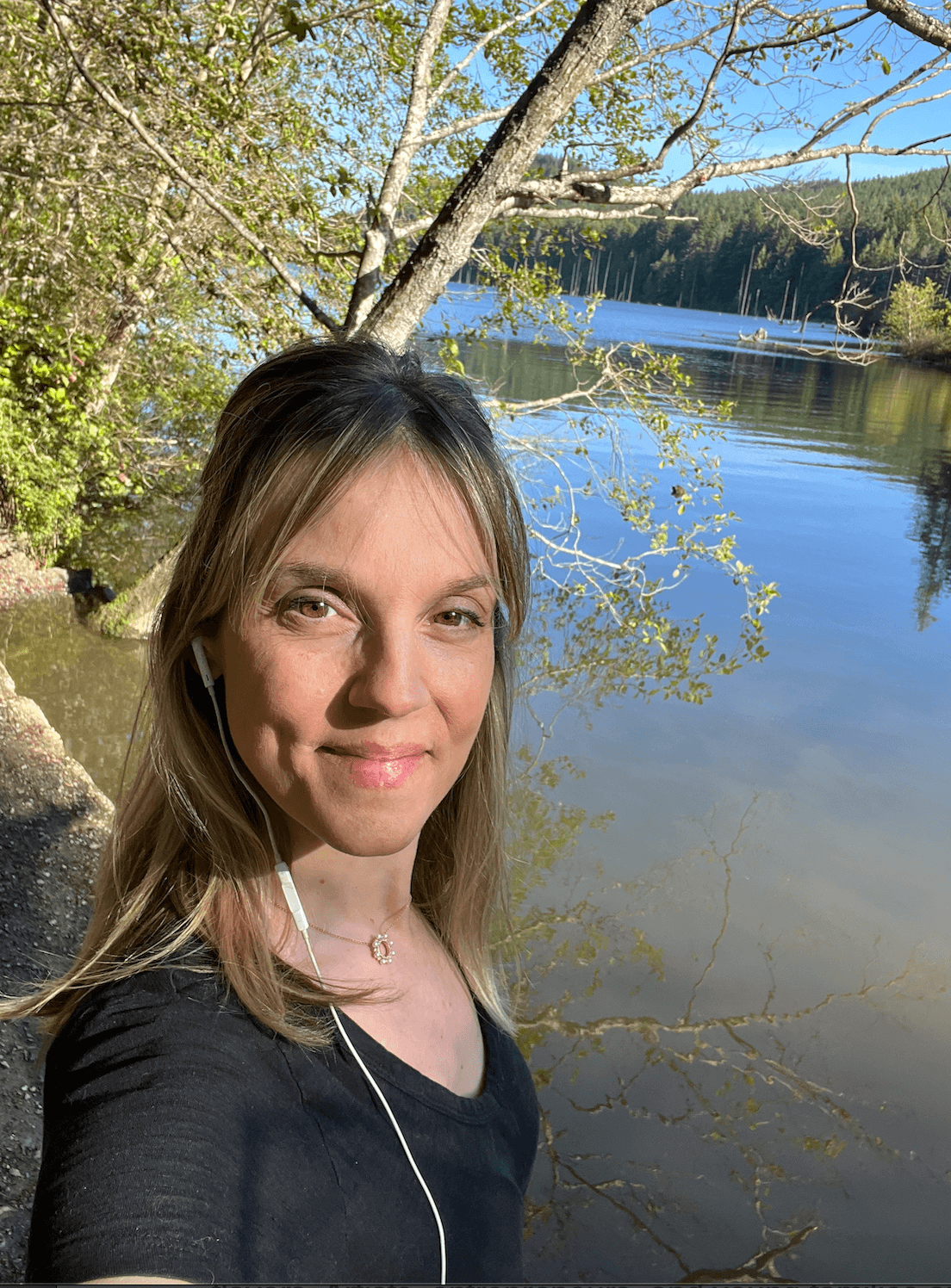
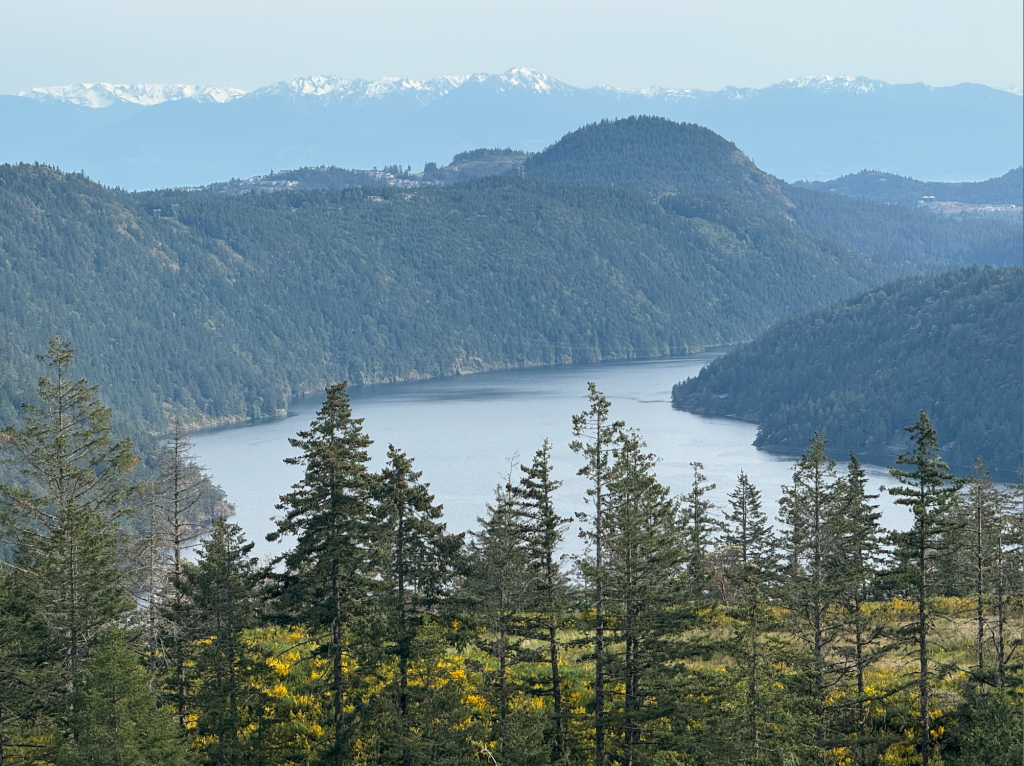
Forest, lakes, wetlands, mountains and the waterfront are woven into everyday life. You don’t necessarily have to plan a special trip to experience nature. You can run a trail before work, walk beside the water after dinner or head out for a paddle without turning it into a weekend expedition.
After living on Vancouver Island for three years, I’ve come to realise how much that proximity changes the way you think about a place.
Nature becomes part of the rhythm of life rather than something you visit.
And that creates an interesting foundation for sustainability. When the landscape is part of your everyday experience, environmental issues stop being entirely abstract. You see the forests. You notice the water. You watch the seasons change.
You become more aware of what could be lost.
Nanaimo Is Planning for Growth
Of course, appreciating nature isn’t enough to make a city sustainable.
Cities have to make decisions about how they grow.
Nanaimo’s City Plan, Nanaimo ReImagined, sets out a 25-year vision for the city, with climate action, active transportation, parks and recreation, health, wellness and equity incorporated into its approach to urban development. The plan reflects an understanding that sustainability isn’t a single environmental policy; it affects how people move, live, work and participate in their communities.
That is an important distinction.
A sustainable city isn’t simply one that produces fewer emissions.
It is one that makes it easier for people to live well while reducing the environmental cost of doing so.
Nanaimo’s climate initiatives include efforts around emissions reduction, energy-efficient buildings, active transportation, electric vehicle infrastructure and environmental projects. The city also provides funding for community-led environmental work, including watershed restoration, habitat improvement and invasive-species removal.
The policy framework matters.
But what interests me more is what happens when those policies leave the city offices and reach the community.
Sustainability Gets Interesting at Ground Level
Some of the most meaningful environmental work is remarkably unglamorous.
People plant native species. They restore habitats. They remove invasive plants. They learn about their watersheds. They grow food. They attend workshops about energy efficiency.
One example is Youth 20/20 Can Nanaimo, which used community environmental grant funding to establish a native plant garden at Beaufort Park. It is a relatively small project, but that is precisely why I find examples like this interesting.
Sustainability doesn’t always have to look impressive.
Sometimes it looks like a group of people deciding that a patch of public land could be better used.
The same principle applies to the Regional District of Nanaimo’s community education programs, which help residents learn about energy efficiency, home upgrades, electric vehicles and climate resilience.
These are practical interventions.
They turn sustainability from something governments talk about into something people can actually do.
And that may be one of the most important pieces of the puzzle.
People are much more likely to participate in a transition when they can see where they fit into it.
The Local Economy Matters Too
There is another part of sustainability that can easily get overlooked: the economy.
A community cannot be environmentally sustainable if it is economically fragile. Nor can it remain socially resilient if local businesses struggle to survive.
This is where initiatives supporting local production and local supply chains become interesting.
Island Good, for example, promotes food and products made on Vancouver Island, helping consumers identify locally produced goods while supporting Island businesses and strengthening regional supply chains.
Buying local isn’t going to solve the climate crisis.
But resilience isn’t created by one solution.
It is built through hundreds of smaller decisions that make a community less dependent on distant supply chains and more invested in its own economic ecosystem.
The same principle can be seen in local businesses experimenting with sustainable practices, community organisations raising awareness and projects that combine environmental goals with social or economic benefits.
Sustainability becomes much more durable when it is connected to people’s livelihoods.
The Infrastructure Question
Eventually, though, sustainability has to become physical.
Buildings matter. Transportation matters. Energy use matters.
The expansion of the Ravensong Aquatic Centre in the Regional District of Nanaimo is one example of this larger shift. Federal funding is supporting an expansion designed to meet Zero Carbon building standards while creating more inclusive recreation space for the region.
This is where the conversation becomes particularly interesting.
Sustainable infrastructure doesn’t have to mean sacrificing quality of life.
Done well, it can improve it.
A more energy-efficient building is still a building people use. A better cycling connection is still a way of getting somewhere. A restored wetland is still a place where people can walk.
The most successful environmental interventions are often the ones that don’t feel like sacrifices.
They simply make the better choice easier.
But Can Nanaimo Keep Its Character?
This is where I think the real question lies.
Nanaimo is growing. Growth brings opportunity, but it also brings pressure.
More housing.
More traffic.
More infrastructure.
More demand on water, energy, roads, parks and public services.
And with growth comes the risk that the very qualities that make a place attractive become casualties of its success.
I’ve lived in cities where this has happened.
A neighbourhood becomes fashionable. Development follows. Independent businesses are replaced. Traffic increases. Green space disappears. The character that attracted people in the first place becomes harder to find.
That is why I think sustainability has to mean more than carbon reduction.
It has to include livability.
Can people still walk somewhere beautiful?
Can children access nature?
Can local businesses survive?
Can people afford to live in the community?
Can growth happen without destroying the landscape?
Can a city become more economically prosperous without becoming less pleasant to live in?
These are sustainability questions too.
Perhaps the Island Has Part of the Answer
I don’t think Nanaimo has solved these questions. No city has.
But there is something encouraging about the combination of its natural setting, community activism, local businesses and increasingly deliberate approach to urban planning.
The city doesn’t have to reinvent itself as a futuristic eco-city.
Perhaps it needs to become very good at something quieter: growing without forgetting what it already has.
The forests matter.
The waterfront matters.
The small businesses matter.
The community groups matter.
The people who volunteer to restore a patch of habitat matter.
So does the homeowner who improves the energy efficiency of their house. The person who chooses an electric vehicle. The family that buys locally. The resident who takes part in a community project.
None of these things, individually, will transform a city.
Together, they begin to create a culture.
And perhaps that is what interests me most about sustainability on Vancouver Island.
It isn’t simply about building a greener future.
It is about deciding what kind of place we want that future to be.
Nanaimo has the opportunity to grow.
The question is whether it can grow well.
Because perhaps the measure of a sustainable city isn’t how futuristic it looks.
Perhaps it is whether, twenty-five years from now, people can still look around and recognise why they wanted to live there in the first place.