On Vancouver Island, a women's wellness retreat is a journey through forests, ocean, fire and unexpected moments of connection reveals that sometimes the greatest luxury is simply having space to come back to yourself.
The Space Between Who We Were and Who We Are Becoming
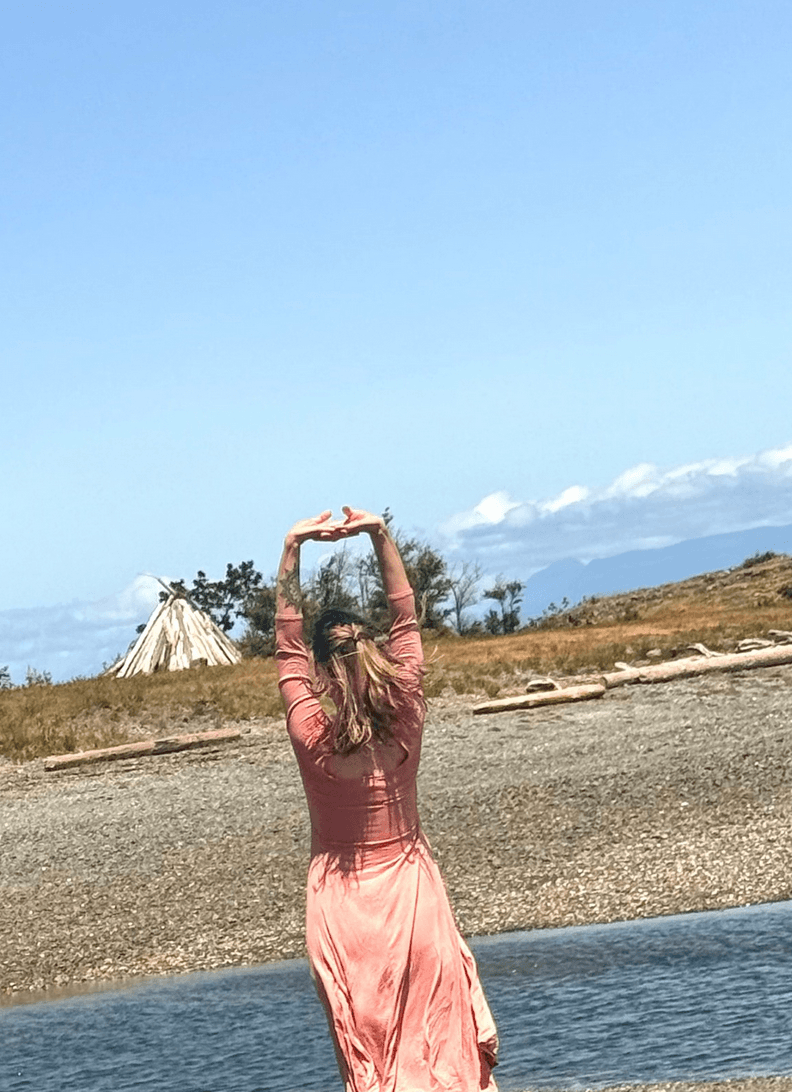
My retreat guest had arrived on Vancouver Island, she carried more than her yoga mat and sundress.
Like many women who come seeking a pause, she carried questions she had been holding quietly, grief she was learning to live alongside, and the uncertainty that comes when one chapter of life has ended but the next has not yet revealed itself.
She was not looking for a perfect answer. Most of us are not. There are seasons in life when what we need is not another destination to explore or another itinerary to complete. We need somewhere to stop long enough to hear ourselves think.
Perhaps that is why so many people are drawn to Vancouver Island. They arrive for the landscapes — the wild Pacific coastline, ancient forests, mountain trails and quiet communities — but often what they discover is something more personal. They discover a place that invites them to slow down enough to reconnect with themselves.
The first thing many visitors notice about Vancouver Island is not necessarily what they see, but what they feel. There is a quietness here that reaches beyond the absence of noise: the pause between waves rolling onto the shore, the sound of wind moving through cedar and fir forests, the stillness that settles in when you are surrounded by something much older and larger than yourself.
In a world that constantly asks us to move faster, the island offers something increasingly rare — permission to slow down.
Not because life has stopped, but because sometimes we need enough space to understand where we are going next.
After living in several countries and experiencing many different cultures, I have learned that every place has its own rhythm. Some places energize us. Some challenge us. Some become part of our identity in ways we never expect.
Vancouver Island has taught me the value of space.
Space is not emptiness. It is where reflection happens. It is where creativity returns, where conversations deepen and where we begin to notice the things we have been too busy to see.
Perhaps this is why people have always been drawn to islands. They create a natural separation from everyday life. The ocean becomes a boundary between where we have been and where we are going. The journey itself — whether by ferry, plane or road — creates a transition.
By the time visitors arrive, something has already shifted.
They have left something behind.
The question is what they will choose to bring forward.
This was the philosophy behind the retreat experience I created on Vancouver Island.
Not an escape from life, but an invitation to return to it differently.
The most meaningful retreats are not about becoming someone new. They are about creating enough quiet to reconnect with the person who has always been there beneath the responsibilities, expectations and roles we accumulate over time.
Many women arrive during moments of transition. They may be navigating a career change, the end of a relationship, grief, caregiving responsibilities, an empty nest or simply the realization that they have spent years being everything to everyone else and have lost touch with what they themselves need.
The challenge is not that they do not know themselves.
Often, they know themselves very well.
The challenge is that they have become disconnected from their own voice.
Modern life rewards productivity and availability. We are encouraged to respond quickly, achieve more and stay connected constantly. Yet many people quietly carry the feeling that somewhere along the way, they have become disconnected from the very things that make them feel most alive.
A retreat creates something that has become increasingly difficult to find: uninterrupted time.
Time to walk without rushing.
Time to have conversations that go deeper than everyday routines allow.
Time to notice what surfaces when there is finally room for reflection.
During those days together, I watched my guest begin to explore the experiences that had shaped her. She approached each conversation with curiosity and courage, willing to look honestly at both the joyful moments and the difficult ones.
We spoke about the loss of her mother and the many ways people continue relationships with those they have lost. Grief does not always arrive as something that can be solved or completed. Sometimes it becomes something we learn to carry, weaving memories and rituals into the lives we continue to build.
We talked about the importance of creating meaning, even when circumstances do not provide the ending we hoped for.
Because life rarely offers perfect endings.
More often, we have to create them ourselves.
That understanding became an important part of her journey: recognizing that endings can also become beginnings, and that moving forward does not require forgetting what came before.
There is a reason retreats have become increasingly meaningful for many women.
They offer more than beautiful surroundings. They offer the opportunity to be seen.
That may be one of the greatest gifts we can give another person.
To be noticed.
To be listened to.
To have someone recognize the things we do not always say out loud.
For a few days, my guest was not required to be the person who held everything together. She did not have to perform, achieve or explain herself. She could simply arrive as she was.
The landscape helped create that environment.
The forest offered quiet.
The ocean created perspective.
The slower rhythm of island life encouraged presence.
But ultimately, transformation does not come from a place alone. It comes from the relationship we build with ourselves while we are there.
Vancouver Island does not change people by giving them a new identity.
It gives them enough space to reconnect with the one they already have.
And sometimes, that is where change begins.
The Places That Help Us Remember Who We Are
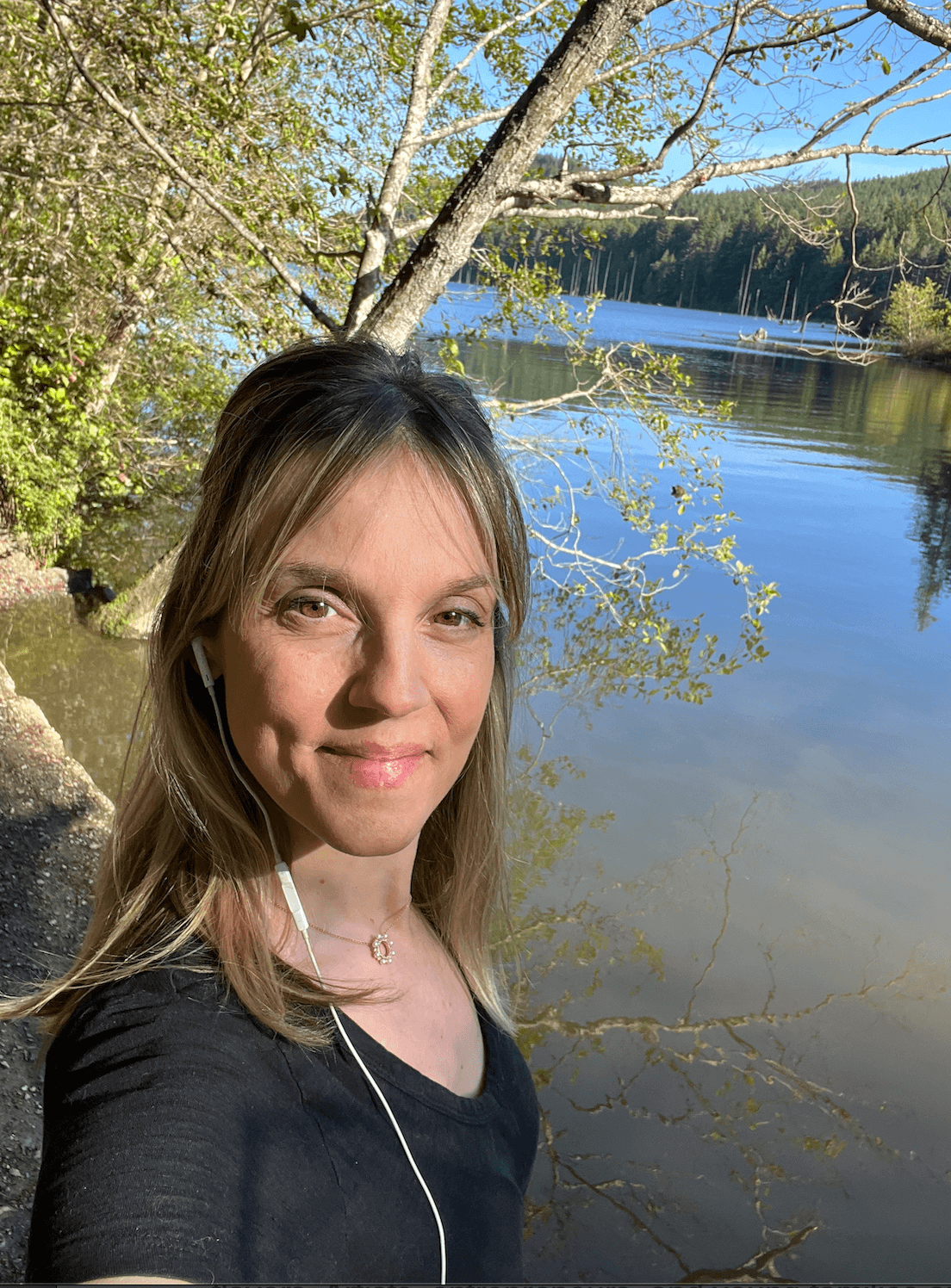
The morning we hiked to Heart Lake, there was no expectation that the experience needed to become anything more than a walk in nature.
That was part of the gift.
In everyday life, even rest can sometimes become something we measure and optimize. We schedule wellness appointments, track our steps, plan our weekends and search for experiences that will leave us feeling transformed. But some of the most meaningful moments happen when we stop trying to force an outcome and simply allow ourselves to be present.
The trail offered exactly that.
As we walked, conversation came naturally, moving between lighthearted observations and deeper reflections. There were moments when we talked about the experiences that had shaped us, and moments when silence felt equally valuable. The forest created a space where neither needed to be filled.
We moved slowly, noticing the details that are easy to miss when we are rushing through life: the changing texture of the trees, the scent of the forest after rain, the sound of our footsteps against the trail and the way the landscape seemed to invite us to pay attention.
By the time we reached Heart Lake, the reward was not simply the destination.
It was the journey that brought us there.
The physical effort mattered. There is something deeply grounding about using our bodies, about feeling our muscles work and remembering that we are capable of more than we sometimes believe. For many people, especially those who spend much of their lives caring for others, reconnecting with the body can be a powerful reminder that they are not simply minds managing endless responsibilities.
They are living, breathing, feeling human beings.
After the hike, we swam in the lake.
The water was cold, clear and immediate. It required us to be completely present. There was no space for overthinking or planning ahead. There was only the sensation of the moment itself — the water, the trees, the sky above us and the quiet joy of doing something simply because it felt good.
These are often the moments we remember from travel.
Not necessarily the most expensive experiences.
Not the most carefully curated ones.
The moments when we felt fully alive.
One of the reasons nature-based travel has become such an important part of wellness is because it reconnects us with rhythms that modern life often interrupts.
Most of us spend our days moving according to external schedules. We respond to messages, meet deadlines, manage responsibilities and make decisions at a pace that rarely allows time for reflection. Even our leisure time can become another opportunity to accomplish something.
Nature operates differently.
The forest does not rush toward the next season. The ocean does not question whether it is moving quickly enough. The mountains do not measure their value by productivity.
They exist through cycles.
Growth.
Change.
Rest.
Renewal.
Spending time in these environments reminds us that we are part of those same cycles. There are times when we expand and achieve, but there are also times when we need to pause, restore and gather the energy required for what comes next.
Perhaps this is why so many people are drawn to Vancouver Island during periods of transition. They are not simply looking for beautiful scenery. They are looking for a place that reflects something they need to remember about themselves.
That slowing down is not the same as standing still.
That rest is not the opposite of progress.
That change requires space.
Vancouver Island has a remarkable ability to create these moments because of the relationship between its geography and its communities.
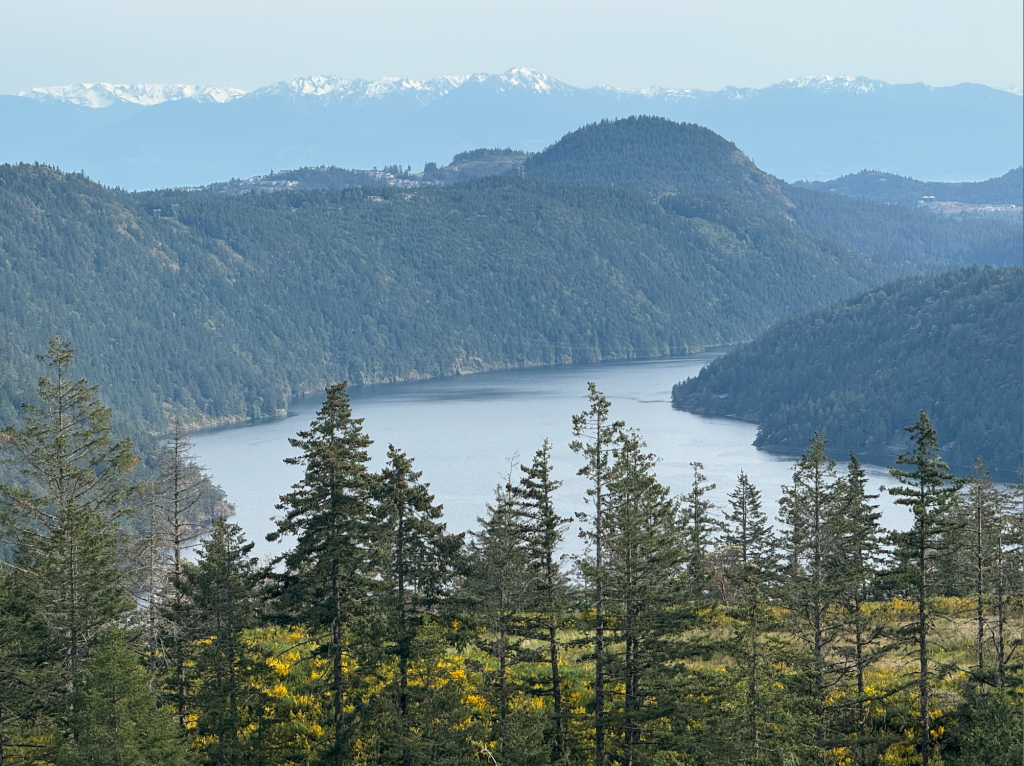
The island is a place of contrasts. Within a relatively short distance, travellers can move from sandy beaches to alpine landscapes, from vineyards and farmland to ancient forests, from bustling communities to places where the silence feels almost complete.
The landscape is diverse, but the feeling is consistent.
It encourages attention.
Along the west coast, the relationship between people and nature becomes especially powerful. Places such as Tofino and Ucluelet have become internationally recognized not simply because of their dramatic beauty, but because of the way they invite visitors to experience the Pacific Ocean on its own terms.
Here, the ocean is not simply a view from a window.
It is a presence.
The waves, weather and tides shape daily life. A storm is not something to avoid but something to witness. A walk along the beach becomes more than exercise; it becomes an opportunity to stand at the edge of something vast and remember our place within it.
The ocean has a way of changing perspective.
Our challenges do not disappear, but they are placed into a larger context.
We remember that life is always moving.
The same feeling exists in the forests that cover much of Vancouver Island.
Walking among ancient trees creates a different relationship with time.
Places such as Cathedral Grove remind visitors that there are stories unfolding around us that extend far beyond our own individual experiences.
Standing beneath trees that have witnessed generations come and go naturally shifts our perspective.
The worries that feel overwhelming in our everyday lives remain real, but they become part of a much larger landscape.
This is one of nature’s quiet gifts.
It reminds us that we belong to something.
For Indigenous peoples who have lived on these lands since time immemorial, this relationship with place has never been about scenery alone. The forests, waters and mountains of Vancouver Island are living places with deep cultural, spiritual and historical significance.
For visitors, approaching the land with curiosity and respect offers a deeper understanding of what it means to travel somewhere.
The goal is not simply to see.
It is to listen.
This is why I believe adventure and restoration are not opposites.
We often imagine wellness as something passive — a quiet room, a spa treatment, a moment of stillness. Those experiences can be deeply valuable, but restoration can also come through movement.
Sometimes we need to walk farther than we expected.
Sometimes we need to climb.
Sometimes we need to step into cold water and remember that we are stronger and more resilient than we realized.
The hike to Heart Lake was not transformative because it was difficult.
It was meaningful because it created a moment of connection.
Connection to the landscape.
Connection to the body.
Connection to the person standing beside you.
For my guest, these experiences became part of a larger journey. The hike, the swim, the paddleboarding, the spa experience and the quiet moments of conversation were not separate activities on an itinerary.
Together, they created a rhythm.
There were moments of reflection and moments of joy. There were opportunities to honour what had been lost and opportunities to imagine what could come next.
That is the beauty of a meaningful journey.
It does not erase the past.
It helps us carry it differently.
And perhaps that is what Vancouver Island offers so many visitors.
Not a chance to become someone else.
A chance to return home feeling more connected to who they already are.
The People Who Make a Place Feel Like Home
A destination is often introduced through its landscapes. We describe the mountains rising above the horizon, the beaches stretching along the coastline, the forests that seem to belong to another era. These are the images that first draw us in and the photographs we carry home.
But after living on Vancouver Island, I have come to believe that the places that stay with us are rarely defined only by what we see. They are defined by the people we encounter and the moments of connection that remind us we are part of something larger than ourselves.
A landscape may inspire us, but it is often human connection that creates a sense of belonging.
This was one of the things that surprised me most after moving to Vancouver Island. Having lived in several countries and some of the world’s largest cities, I had experienced many different ways of living alongside other people. In some places, anonymity was part of daily life. Millions of people could pass each other on the street without ever making eye contact. In others, community was woven more naturally into everyday interactions.
Vancouver Island offered me something I had not expected: a culture of small connections.
People smiled when passing on trails. Strangers started conversations while waiting in line. Someone might ask where you were from, recommend a place to visit or simply share a moment of humour about the weather. These interactions were brief, but they carried a warmth that began to change how I experienced the place.
Over time, I realized these small moments were teaching me something about belonging. Connection does not always begin with a deep friendship or a shared history. Sometimes it begins with something much simpler — the feeling that someone has noticed you.
I remember a conversation I had one day while shopping at a local dollar store. It was an ordinary moment that could easily have disappeared into the background of everyday life, but instead it stayed with me because of the simple kindness of the interaction. A stranger took the time to talk, to share a laugh, to share a moment when I was feeling uncertain in my decision to move to the island, and to connect.
It was not a dramatic encounter. Nothing about it would make the news or become a story people would tell for years. But those are often the moments that shape how we experience a place.
After that, I began paying closer attention to the way people interacted around me. On my regular hikes, strangers would smile and say hello as they passed. People acknowledged one another. There was an openness that encouraged you to participate rather than simply move through the world unnoticed.
The island had made me more friendly.
It had reminded me that connection is a practice. It is something we create through small gestures and everyday choices.
Years later, when I returned to London over Christmas, I noticed the contrast. London is a city I love deeply. It is where I spent formative years of my life, a place filled with culture, history, creativity and endless possibility. But walking through crowded Oxford Street, I found myself curious about whether I could recreate the simple exchanges I had become accustomed to on Vancouver Island.
I tried making eye contact with people as I passed. I looked for the opportunity to smile, the small invitation that says, “I see you.”
In a crowd of thousands, no one looked back.
It was not because people in London were unkind. Cities develop their own rhythms, and in a place where millions of people move quickly through shared spaces, keeping distance can become a form of survival. People are focused on their destinations, their schedules and their responsibilities.
But the experience made me realize how much our environments shape us. The places we live influence not only our routines, but also the ways we interact with the world around us.
Vancouver Island had quietly changed me.
It had made me more open to strangers, more willing to start conversations and more aware of the importance of small human connections.
This is also what makes the island’s communities so meaningful for travellers. The most memorable experiences are rarely created by simply arriving somewhere and consuming what it offers. They are created through relationships.
They happen when a local recommends a trail they love rather than the one that appears at the top of a search page. They happen when a chef explains where the ingredients came from and why they matter. They happen when a business owner shares the story behind something they have created.
These moments allow travellers to move beyond being observers.
They become participants.
They begin to understand the character of a place through the people who have chosen to build their lives there.
One of the reasons I wanted to include stories from people like Jeff is because they represent something essential about Vancouver Island. Behind every meaningful destination are people who have invested their time, creativity and energy into creating something that matters.
Jeff’s stories about his experiences on the island reflect a pattern I have noticed again and again: many people who choose Vancouver Island are searching for a different way of living. Not necessarily an easier life, but a more intentional one. They are drawn to the possibility of creating something connected to nature, community and a slower pace.
Their businesses, homes and daily lives become expressions of what they value.
And when visitors encounter these people, they are not just experiencing a service or an attraction. They are encountering a piece of the island’s identity.
This idea of connection is also central to why retreats can be so powerful.
People often think the greatest gift of a retreat is the location — the beautiful setting, the peaceful accommodation or the carefully planned experiences. These things matter, but they are only part of the story.
The deeper gift is often the experience of being seen.
In everyday life, many people become accustomed to being valued for what they provide. They are appreciated because they are dependable, capable and available. They become the person others call when something needs to be organized, solved or carried.
But rarely do they receive the same attention in return.
A meaningful retreat creates space for someone to arrive without needing to perform. They do not need to have all the answers. They do not need to explain every decision or justify every feeling. They can simply arrive as they are.
For my guest, that was part of the experience I hoped to create from the beginning.
Not to change her.
Not to tell her who she should become.
But to create the conditions where she could reconnect with her own wisdom.
Through conversations, nature, reflection and shared experiences, she began to recognize the strength that was already there.
Perhaps this is what many people are truly searching for when they travel.
Not escape.
Connection.
Connection to a landscape.
Connection to other people.
Connection to themselves.
In a world where we can communicate instantly with people across the globe yet still experience profound loneliness, places that encourage genuine human interaction have become increasingly valuable.
Vancouver Island offers this in ways that are difficult to manufacture.
It exists in a stranger saying hello on a trail.
A conversation that begins unexpectedly.
A host sitting beside a guest beside a fire, listening as someone shares the story of how they arrived there.
These moments may appear ordinary, but they are often the moments we remember most.
Because ultimately, belonging is not created by a destination alone.
It is created through the relationships we form within it.
And perhaps that is why so many people leave Vancouver Island feeling that they experienced something more than a beautiful place.
They experienced connection.
They experienced welcome.
They experienced, even briefly, what it feels like to belong.
The Ritual of Letting Go
On the final evening of the retreat, we gathered around the fire.
There is something instinctive about fire. Across cultures and throughout human history, people have gathered around flames to share stories, mark transitions and create moments of meaning. Fire has always represented both endings and beginnings — the ability to release what no longer serves us while creating space for something new.
That evening, the intention was simple: to let go.
Not to erase the past.
Not to pretend that difficult experiences had not happened.
But to acknowledge them.
This distinction matters.
When people move through significant life transitions, there is often a desire to quickly move forward. We are encouraged to “start fresh,” to find the lesson, to focus on the future. But meaningful change rarely happens by skipping over what came before.
The past needs to be witnessed.
The experiences that shaped us need to be honoured.
Even the chapters we would not choose again often contain parts of ourselves that deserve compassion.
This is something recognized in change management psychology: lasting transformation does not happen simply because we decide to change. People need time to process what is ending, to understand what they are leaving behind and to create a sense of closure before they can fully step into what comes next.
A transition is not just about moving from one place to another.
It is about identity.
It is about releasing an old version of ourselves and making room for a new one.
For my guest, the fire ceremony became a way to acknowledge the relationship she was leaving behind and the impact it had on her life.
Relationships are complex. Even relationships that have caused pain often contain moments of love, connection, hope and memories that mattered. It can be tempting to define an entire chapter only by its ending, but healing often requires a more honest approach.
To recognize that something may no longer be right for us does not mean it was meaningless.
To choose ourselves does not require us to reject everything that came before.
Sometimes the most compassionate thing we can do is thank a chapter for what it taught us and allow ourselves permission to close the book.
Around the fire, we reflected on what she wanted to release and what she wanted to carry forward. The ceremony was not about creating a dramatic moment. It was about creating a physical expression of an internal decision.
The act of writing something down and placing it into the fire gave shape to something that had previously existed only as a thought.
It became a declaration.
A boundary.
An intention.
One of the most powerful parts of guiding retreats is witnessing the moment when someone begins to see themselves differently.
Often, people arrive carrying stories they have repeated for years.
Stories about what they should have done differently.
Stories about why they were not enough.
Stories about what they lost.
But through time, conversation and reflection, something begins to shift.
They begin to see not only what happened to them, but how they responded.
They begin to recognize their own courage.
They begin to understand that starting again is not evidence that they failed.
It is evidence that they are still growing.
For my guest, this was one of the greatest gifts of the retreat. She arrived open, curious and willing to explore what was ready to change. She embraced each experience with thoughtfulness, allowing herself to reflect on both the joys and challenges that had shaped her.
As we spoke about the loss of her mother, we explored the importance of honouring loved ones in ways that continue beyond their physical presence. Sometimes healing is not about finding a perfect ending, because life rarely offers those.
Instead, healing comes from creating meaning.
From finding ways to carry love forward.
From recognizing that endings can also become beginnings.
The retreat was filled with moments that might seem simple when viewed individually.
A hike through the forest.
A swim in a mountain lake.
Paddleboarding on the water.
Quiet conversations over meals.
Time spent outside watching the changing light move across the landscape.
A visit to the spa.
Laughter around the fire.
But meaningful transformation rarely comes from one single moment.
It comes from accumulation.
It comes from creating enough space for someone to hear themselves again.
This is why retreats can be so different from traditional vacations.
A vacation often gives us a break from our lives.
A retreat invites us to reconnect with them.
The difference is subtle, but important.
A retreat is not about escaping responsibility forever. It is about returning with greater clarity, awareness and intention.
It creates a pause between who we have been and who we are becoming.
On her final day, I shared with her what I had witnessed during our time together.
From the moment she arrived, I experienced her as open, curious and genuinely willing to explore what was ready to change. She had allowed herself to be present with both the difficult and beautiful parts of her story.
She had honoured her mother.
She had reflected on love and loss.
She had explored what it meant to remain connected to her own emotional world and to trust her feelings rather than diminish them to make someone else comfortable.
My hope was that when she looked back on the retreat, she would remember not only the experiences we shared — the hike, the paddleboarding, the fires, the quiet moments, the laughter and the spa — but also the promise she made to herself.
A promise to move forward with greater self-trust.
Greater self-compassion.
Greater openness to relationships and experiences that support who she truly is.
Because ultimately, the greatest transformation is not becoming someone new.
It is remembering the person who was there all along.
The Quiet Art of Belonging
When people talk about travel, they often talk about discovery. They describe the places they want to see, the landscapes they want to photograph and the experiences they hope to collect. But underneath that desire to explore is often something much deeper: the human need to feel connected.
We do not only travel to see new places.
We travel to understand where we might fit within them.
Belonging is one of the most powerful yet difficult things to define. It is not simply about having a home or knowing the streets around you. It is the feeling of being recognized, of being welcomed, of knowing that your presence matters.
It is the feeling that you are not moving through the world completely alone.
This was one of the unexpected lessons Vancouver Island gave me.
When I first arrived, I was drawn, like many people, by the obvious beauty. The mountains rising behind the coastline. The forests that seem to hold centuries of stories. The ocean stretching endlessly toward the horizon.
But over time, I realized the thing that changed me most was not the scenery.
It was the people.
After living in different countries and cities throughout my life, I had experienced many different versions of community.
Some places offered incredible energy and opportunity but also a sense of anonymity. Others had strong traditions and deep connections built over generations.
Vancouver Island offered something I had not expected.
A gentler form of everyday connection.
It appeared in small moments.
A stranger stopping to chat while waiting in line.
Someone offering a recommendation about a hidden beach or favourite trail.
A person passing by on a morning walk offering a smile and a hello.
At first, I noticed these moments because they felt unusual. Then, slowly, they became part of my daily rhythm.
On my regular hikes, I began recognizing familiar faces. We were not necessarily friends in the traditional sense. We did not know each other’s life stories or spend time together outside of those encounters.
But there was recognition.
There was a shared understanding that we belonged to the same place, walking the same paths and appreciating the same landscape.
Those small exchanges became reminders that community does not always have to be built through large gestures.
Sometimes it begins with simply acknowledging another person.
I remember one afternoon at a local dollar store when a stranger started a conversation with me. It was such an ordinary interaction that, in another place, I might not have thought twice about it.
But after moving to Vancouver Island, I began to understand the importance of these small moments.
The conversation was brief, but it carried something meaningful: the feeling of being seen.
That word — seen — has become increasingly important to me.
Because so many people today are surrounded by others while quietly experiencing loneliness.
We have more ways than ever to communicate, yet many people feel disconnected. We can send messages instantly across continents, follow the lives of thousands of people online and remain informed about what is happening everywhere in the world, but still miss the simple experience of looking another person in the eye and sharing a moment of human connection.
Perhaps this is why places that encourage slower living feel so valuable.
They create opportunities for us to return to something fundamental.
Presence.
When I returned to London at Christmas, I found myself noticing this difference in a new way.
London will always hold a special place in my heart. It is a city of incredible history, creativity and diversity. It shaped important parts of who I am, and I still feel connected to it.
But walking through the city streets after living on Vancouver Island, I noticed how differently I was interacting with the world.
I found myself looking up.
I looked at people passing by and wondered whether I could recreate those small moments of connection I had become accustomed to.
Could I catch someone’s eye?
Could I smile?
Could I offer that tiny invitation that says, “I see you”?
In crowded streets filled with thousands of people, no one looked back.
It was not because people were unfriendly. Cities develop their own ways of functioning. In places where millions of people share limited space, maintaining a certain distance can become a practical necessity.
But the experience revealed something about the environments we live in.
Places shape us.
They influence how we move through the world, how we interact with others and even how open we become.
Vancouver Island had quietly changed my behaviour.
It had reminded me to look up.
This is perhaps one of the greatest gifts of travel that we rarely discuss.
A meaningful destination does not simply give us memories.
It changes the way we see.
Sometimes we return home with photographs and souvenirs. Sometimes we return with a new appreciation for a landscape or a culture. But occasionally, a place leaves us with something deeper.
A new way of being.
For me, Vancouver Island reminded me that connection is something we actively create.
We create it when we say hello.
We create it when we stop long enough to listen.
We create it when we make space for another person’s story.
This is also why the people behind the island’s experiences matter so much. The most memorable businesses, retreats, restaurants and accommodations are rarely memorable only because of what they offer.
They are memorable because of how they make people feel.
A guest remembers the host who noticed something important.
A traveller remembers the guide who shared a story.
A visitor remembers the person who made them feel welcome.
These are the moments that transform a destination from somewhere we visit into somewhere we connect with.
Perhaps this is why so many people arrive on Vancouver Island searching for something they cannot quite name.
They may think they are looking for a beautiful vacation.
They may think they are looking for adventure, relaxation or a break from routine.
But often, what they are really searching for is connection.
Connection with nature.
Connection with others.
Connection with themselves.
The island does not promise to solve every problem or provide an escape from life’s challenges.
What it offers is something more realistic and perhaps more valuable.
A place where we can slow down enough to listen.
To the ocean.
To the forest.
To the people around us.
And, eventually, to ourselves.
The Journey We Carry Home
She arrived carrying more than a yoga mat and a sundress.
Like so many women who find their way to places of restoration, she arrives carrying the invisible weight of everything that came before: decisions that have been postponed, responsibilities that have accumulated, relationships that have shaped her, losses she is still learning to hold, and the quiet exhaustion that comes from spending years being the person others rely on. She may not be able to clearly articulate what she needs when she arrives. She may not have a perfectly defined intention or a clear vision for what comes next. Often, people do not arrive at a retreat because they have all the answers. They arrive because something within them recognizes that they need a pause.
And then she arrives on Vancouver Island.
The first thing many visitors notice about this place is not always something they can photograph. It is a feeling. It is the space between waves as they reach the shoreline, the sound of wind moving through ancient forests, the way the landscape seems to encourage a slower pace. It is the sensation of stepping away from the constant demands of daily life and realizing there is finally enough quiet to hear your own thoughts again.
In a world that increasingly measures success by speed, productivity and constant connection, Vancouver Island offers something that has become surprisingly rare: permission to slow down. It creates space for reflection, restoration and reconnection. It allows people to step away from the roles they have been carrying and remember that they are not only what they do for others. They are individuals with their own hopes, needs and dreams.
Perhaps this is why people have always been drawn to this island. They come for the beaches, the forests, the mountains and the ocean, but often they leave remembering something much more personal.
They leave remembering themselves.
I think I was especially aware of this sense of connection because I have spent much of my life moving between different places and cultures.
I was born in Africa, and some of my earliest memories and strongest impressions come from the warmth of the people there. Every time I have returned, I have been reminded of something that feels deeply human and increasingly precious: the simple act of acknowledging another person.
People smile.
They ask how you are doing — and genuinely wait for the answer.
Children wave from the side of the road as you pass.
Strangers start conversations without needing a reason beyond the fact that you are there.
There is a generosity in those small interactions that communicates something important: you are welcome here.
It is not about grand gestures or formal hospitality. It is about everyday recognition. The understanding that another person’s presence matters.
Having lived in different countries throughout my life, I have learned that every culture expresses connection differently. Some places create belonging through deep family networks. Others through neighbourhood traditions, shared meals or community gatherings. Some places are built around a slower pace of conversation and a willingness to engage with strangers.
What surprised me about Vancouver Island was finding that same feeling of human warmth in a place I had not expected.
When I first moved to Vancouver Island, I was drawn by the obvious beauty. The mountains rising behind the coastline. The forests that seem to hold centuries of stories. The ocean stretching endlessly toward the horizon.
But over time, I realized the thing that changed me most was not the scenery.
It was the people.
After living in large cities where anonymity often becomes part of daily life, I noticed the difference in small moments. Someone would smile while passing on a trail. A stranger would start a conversation while waiting in line. Someone would take the time to share a recommendation about a favourite place.
At first, I noticed these moments because they felt unusual.
Then, slowly, they became part of my everyday life.
On my regular hikes, I began recognizing familiar faces. The man with the grey beard and walking stick, the young athlete doing his second lap, the women named Lori. We were not necessarily friends in the traditional sense. We did not know each other’s personal stories or spend time together outside of those encounters. But there was recognition.
There was a shared understanding that we belonged to the same place.
Those simple exchanges reminded me that community does not always begin with deep relationships. Sometimes it begins with something much smaller.
A smile.
A hello.
The feeling that someone has noticed you.
I remember one afternoon at a local dollar store when a stranger started a conversation with me. It was such an ordinary interaction that, in another place, it might have disappeared into the background of everyday life.
But after moving to Vancouver Island, I began to understand the importance of these moments.
The conversation was brief, but it carried something meaningful: the feeling of being seen.
That word — seen — has stayed with me.
Because so many people today are surrounded by others while quietly experiencing loneliness. We have more ways than ever to communicate, yet many people feel disconnected. We can instantly reach someone on the other side of the world, but still miss the simple experience of looking another person in the eye and sharing a moment of genuine human connection.
Perhaps this is why places that encourage slower living feel so valuable.
They return us to something fundamental.
Presence.
When I returned to London at Christmas, I found myself noticing this difference in a new way.
London will always hold a special place in my heart. It is a city of incredible history, creativity and diversity. It shaped important parts of who I am, and I remain deeply connected to it.
But walking through the city streets after living on Vancouver Island, I noticed how differently I had begun to move through the world.
I found myself looking up.
I tried to make eye contact with people passing by, hoping to recreate those small moments of connection I had become accustomed to on the island.
In crowded streets filled with thousands of people, no one looked back.
It was not because people were unkind. Cities have their own rhythms, and in places where millions of people move through shared spaces every day, distance can become a form of protection.
But the experience revealed something important.
The places we live shape us.
They influence how we interact, how open we become and how we understand our relationship with the world around us.
Vancouver Island had quietly changed me.
It had reminded me to look up.