I Moved to Vancouver Island. Somewhere Along the Way, I Became a Naturalist.
For two years now, living on Vancouver Island has been quietly re-educating me.
I arrived with my city reflexes still intact — the habit of comparing, measuring places against more polished versions of themselves. I had lived in cities where everything was easy to find, where restaurants, galleries, shops and cultural distractions were always within reach. I was used to a certain pace, and to judging a place by what it offered.
Victoria, with its flowerbeds and façades and carefully tended charm, is often held up as the Island’s thriving heart. Nanaimo, by contrast, is sometimes spoken about in gentler, almost apologetic tones. It’s trying, people say. It has potential.
But after two years here, I’ve come to see it differently.
Nanaimo isn’t failing to thrive. It is simply thriving on a different timeline.
And somewhere between the windstorms, the rock beneath our house and the daily theatre of birds overhead, something else has happened.
My inner David Attenborough has emerged.
Not the documentary narrator, exactly. More the person who watches.
Because living here has made me pay attention in a way I never really had to before.
Learning to See What’s Actually Here
In my first months on the Island, I regularly mistook turkey vultures for eagles. Their enormous wingspans fooled me every time.
Eventually, I learned to look more carefully.
A turkey vulture holds its wings in a slight V as it rides the thermals. A bald eagle has a different quality to its flight — steadier, more purposeful. One scavenges. One hunts.
Both belong here.
Now I can usually tell when a hummingbird is a Rufous — fiery, territorial and seemingly convinced that the entire garden belongs to it — or an Anna’s, which is softer in colour and remarkably happy to stick around through the winter.
I’ve learned that the Canada geese I once regarded as noisy background scenery are actually extraordinarily disciplined migrants, following routes that have been passed down through generations.
I’ve learned that salmon are not simply salmon. Chinook, Coho, Sockeye, Pink — different species, different journeys, different vulnerabilities.
None of this knowledge came from sitting down and deciding I was going to become a naturalist.
It came from living somewhere long enough to notice.
That may be one of the great differences between travelling somewhere and living there.
When you travel, you look.
When you live somewhere, eventually, you start to see.
A House on a Rock
Our home is built on rock — quite literally.
The acreage was once a quarry, and you can still see evidence of that history in the land. Water moves differently here. Trees find their way around the rock rather than through it. The wind funnels through the open spaces in ways that can make an ordinary evening suddenly feel rather less ordinary.
At first, I found the rock frustrating.
It seemed to be everywhere. Digging, planting and doing anything that involved putting something into the ground became an exercise in negotiation.
I’ve since developed a grudging respect for it.
Rock isn’t particularly interested in what we want.
It doesn’t move because we have a plan.
And after one particularly heavy storm, when part of the cliff face on our property gave way and rocks came tumbling down, I was reminded that this is not entirely our land anyway.
Before I had even worked out what needed doing, our neighbours appeared.
Boots on. Gloves ready.
They helped clear the debris, offered advice and quietly got things back into order.
Nobody made a big thing of it.
They just showed up.
I’ve come to realise that this is one of the less obvious things about Island life. Community here can be wonderfully practical. It isn’t necessarily about making a statement about being a good neighbour. It is simply about noticing when someone needs help and doing something about it.
Weather Has a Way of Getting Your Attention
The weather is another teacher.
On the mainland, I could largely ignore it. Rain was rain. Wind was wind. I would check the forecast, dress accordingly and carry on.
Here, particularly living on acreage, weather has consequences.
One storm in particular stays with me.
The wind had been building all afternoon, moving through the trees with that low, restless sound that makes you pay attention. As darkness fell, flashes appeared in the distance as power lines and equipment were affected by the storm.
Then the power went out.
The house went quiet.
No hum from the appliances. No lights. Just wind and rain outside.
And suddenly the balance of power — quite literally — had shifted.
Nature was in charge.
It was a useful reminder.
We can have electric cars, fast internet, smart homes and every convenience imaginable, but a sufficiently determined Pacific storm can still switch the lights off.
And when you live close enough to nature, changes in the environment stop being abstract.
You notice when the dry season seems longer.
You notice when the rain arrives differently.
You notice when birds appear earlier or later.
You notice the garden struggling.
You notice the salmon.
You begin to understand climate change not as a graph on the evening news, but as something that shows up in the place where you live.
And Then There Was the Bear
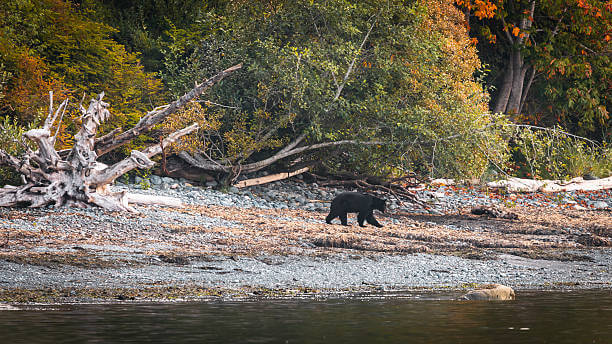
One afternoon, driving along a familiar road, I came around a bend and found myself looking at a mama bear and her two cubs.
They were standing in the road.
I stopped.
She looked at me.
I looked at her.
For a few seconds, neither of us seemed entirely sure what the other was going to do.
Eventually she decided that I was probably more trouble than I was worth and disappeared into the forest, the cubs tumbling after her.
It was an extraordinary encounter, but what stayed with me was the realisation that I was the one who was out of place.
I was driving along a road that I regarded as familiar.
She regarded the whole landscape as home.
There is something humbling about that.
We tend to think of ourselves as the inhabitants of a place and wildlife as something we occasionally encounter in it.
Living here has made me see it the other way around.
We are sharing the place.
Nanaimo’s Quiet Work
This is also why I’ve started to see Nanaimo differently.
It doesn’t perform itself particularly well.
Victoria has the beautiful gardens, historic buildings and carefully curated charm. Nanaimo is more understated. Its beauty tends to reveal itself when you’re not necessarily looking for it.
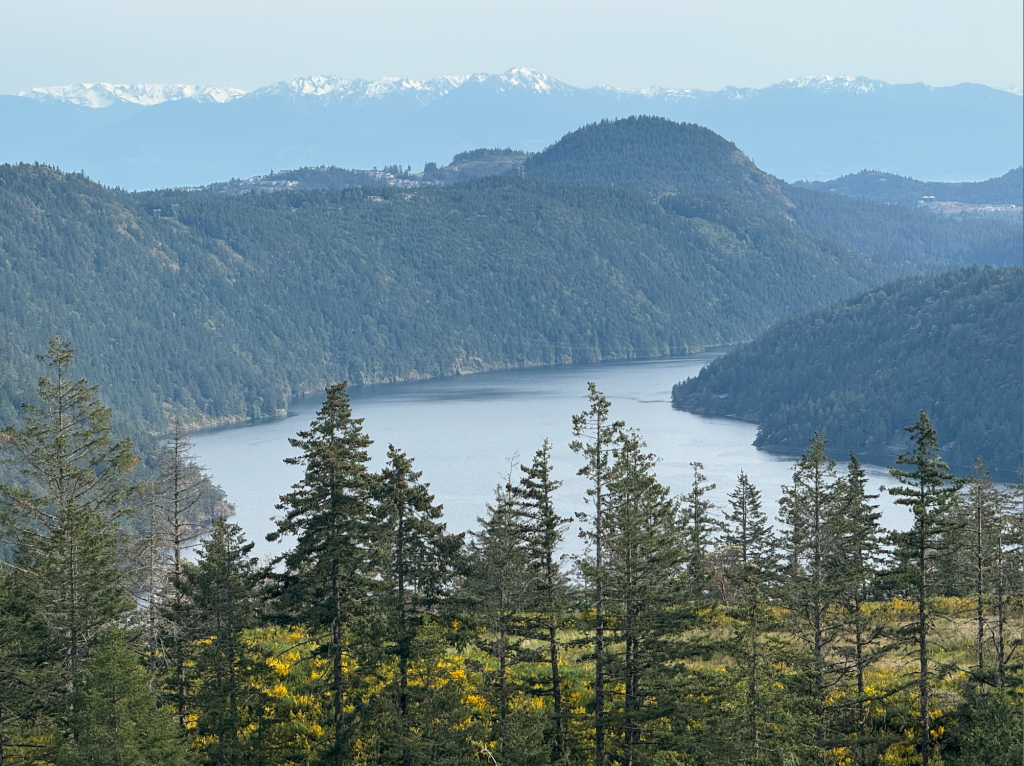
A forest trail that starts rather unremarkably suddenly opens onto an extraordinary view.
A working harbour sits alongside the waterfront.
A neighbourhood road leads you somewhere you didn’t expect.
People borrow tools from one another.
Neighbours check on each other after storms.
There is a sense that things are still being figured out.
And perhaps that is what I like about it.
There is something honest about a place that doesn’t pretend to have everything sorted.
Nanaimo is growing. It is changing. There are conversations about development, housing, infrastructure and what the city wants to become.
But underneath all of that is a place with a strong relationship to its landscape and, increasingly, a community that seems to understand that what makes the city attractive isn’t simply what can be built here.
It is what is already here.
Becoming Part of the Ecosystem
After two years, I’ve stopped expecting Nanaimo to become something else.
I’ve stopped comparing it quite so much with Victoria, Vancouver or the cities I knew before.
I’ve stopped asking whether it is polished enough, developed enough or cosmopolitan enough.
Instead, I’ve started noticing what it actually is.
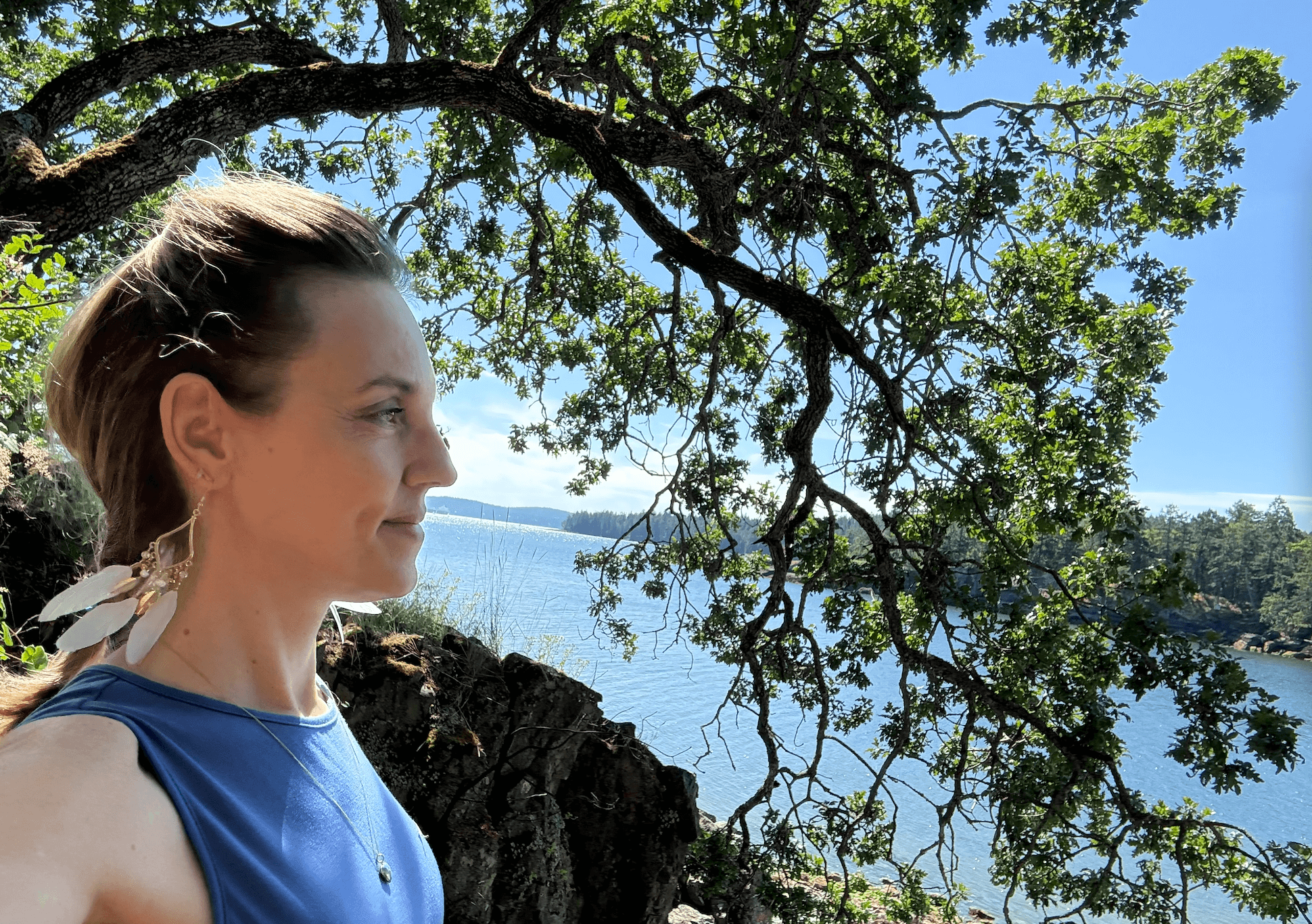
I notice the light on the water.
I recognise the sound of certain birds.
I know that when the wind changes, the trees will tell me before the forecast does.
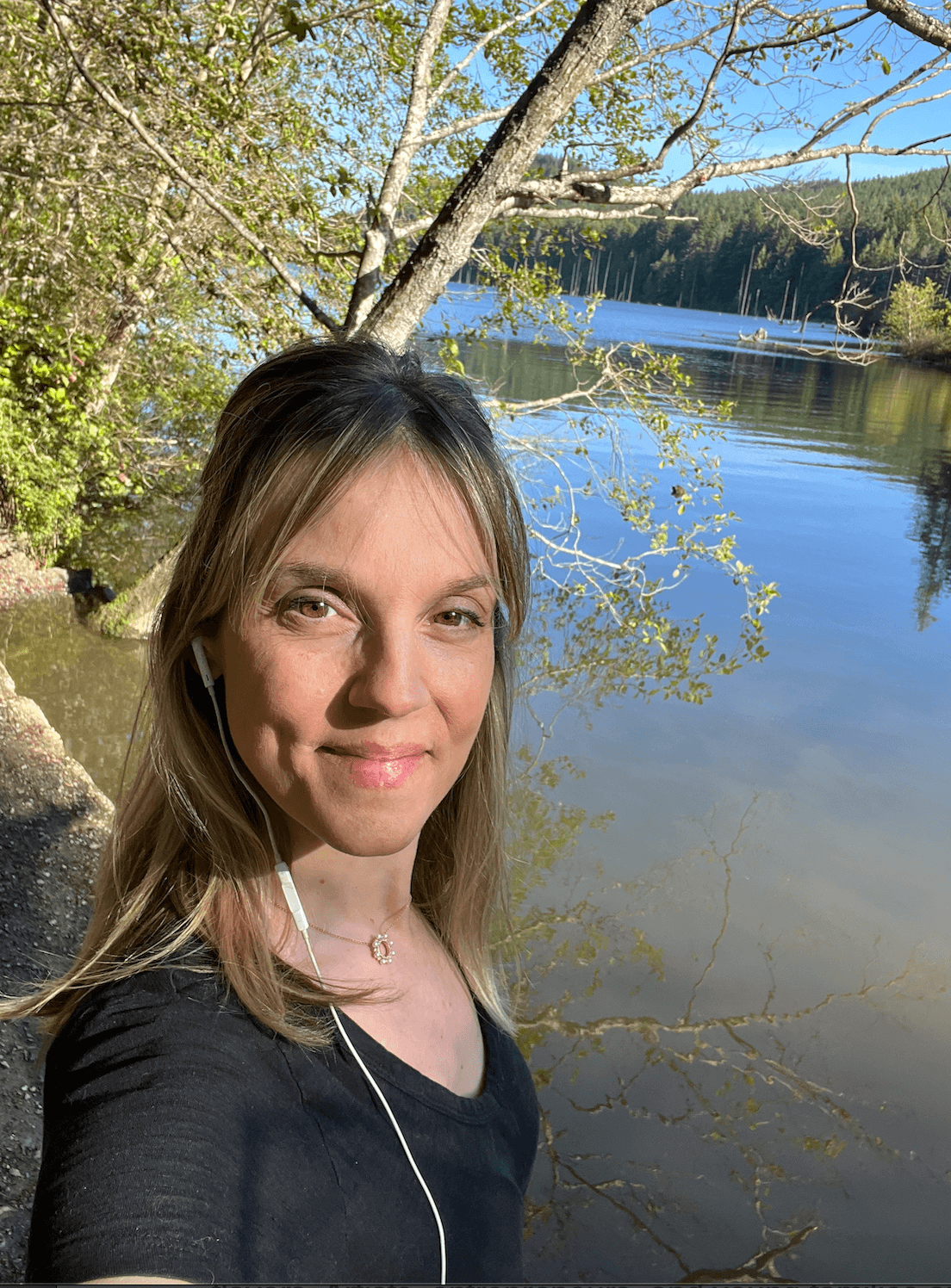
I notice who says hello when I’m walking around the lake.
I look up when I hear a particular bird call.
I slow down when I see movement at the edge of the forest.
These are small things, but they represent quite a significant change in me.
I came to Vancouver Island as someone who was used to experiencing places by exploring them — travelling, eating, visiting, discovering.
I’m learning that there is another way to know a place.
You watch it.
You repeat the same walks.
You notice the seasons.
You learn the birds.
You get to know the neighbours.
You experience the storms.
You learn where the water goes when it rains.
You become familiar with the rock beneath your feet.
And eventually, almost without realising it, the place begins to feel less like somewhere you moved to and more like somewhere you belong.
Perhaps that is what Vancouver Island has really been teaching me.
Not how to live closer to nature, exactly.
But how to pay attention.
And once you start paying attention, it becomes rather difficult not to notice how alive everything is around you.
My inner David Attenborough is still very much a work in progress.
But I’m learning.